



Erdoğan Reportedly Gives “Green Light” for Possible Öcalan Meeting
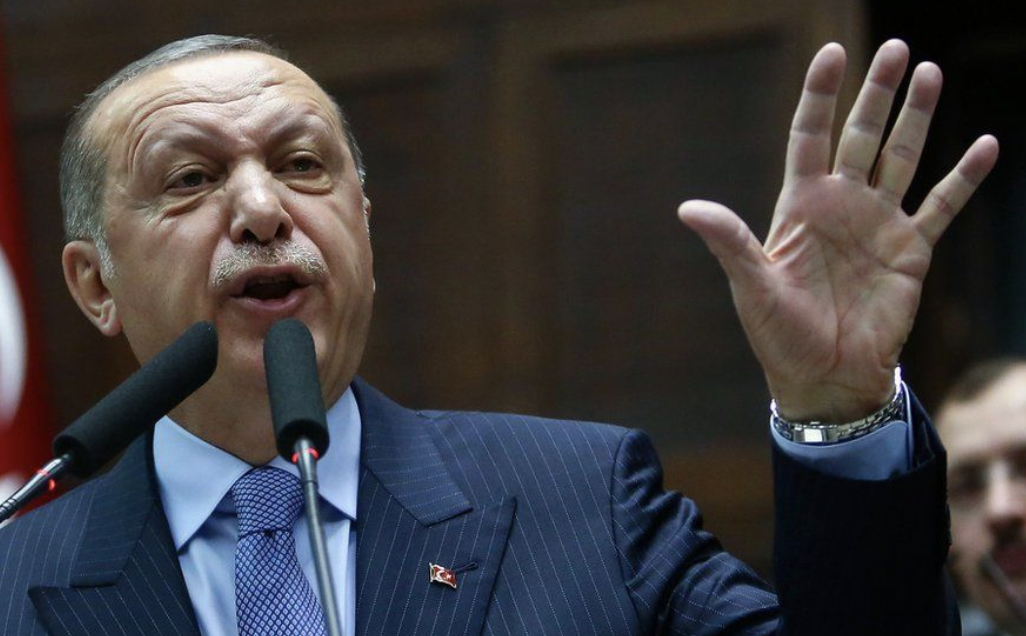 Erdoğan
In a development that could mark a significant turn in Turkey’s long-standing Kurdish question, Hürriyet columnist Abdulkadir Selvi has claimed that President Recep Tayyip Erdoğan signaled approval for a potential meeting with Abdullah Öcalan, the imprisoned leader of the PKK, during a recent discussion at the Presidential Complex with a delegation from the DEM Party’s İmralı Committee.
According to Selvi’s column, published on Monday, the discussion in Ankara has removed earlier hesitations about allowing a parliamentary commission to meet with Öcalan. “During the meeting at the Presidential Complex, doubts over whether Parliament’s commission could meet Öcalan were cleared. Once the commission decides, it will visit İmralı,” he wrote.
The Key Meeting at the Presidential Complex
The meeting took place last week and included Speaker of the Parliament Pervin Buldan and DEM Party MP Mithat Sancar as part of the İmralı Committee. President Erdoğan was joined by Efkan Ala, a senior AK Party official, and National Intelligence Organization (MİT) Chief İbrahim Kalın.
Following the meeting, Erdoğan described the encounter as “constructive and promising for the future,” during remarks at the Atatürk Airport Nation’s Garden opening ceremony in Istanbul. “We held a very productive and hopeful meeting with the DEM Party delegation,” he said. “We will see the outcomes of this meeting in the coming days. We, as the People’s Alliance, believe in acting swiftly for what serves the good of our nation. We are determined to begin a new era of peace, security, and brotherhood not only within our borders but beyond them as well. First, a Turkey without terrorism, then a region without terrorism — that is our goal.”
The “Green Light” to Öcalan Discussions
Selvi’s article argues that Erdoğan’s tone and the results of the meeting indicate a “green light” for initiating contact with Abdullah Öcalan, currently serving a life sentence on İmralı Island. According to Selvi, such a step would be pragmatic rather than ideological. “If the goal is to solve this problem, what harm is there in talking to Öcalan — the only figure who holds real influence over the PKK?” he wrote.
The columnist added that some hesitation within AK Party ranks is understandable. “While trying to solve the Kurdish issue, we must not create a ‘Turkish issue.’ The timing, form, and communication of such talks matter. The process must strengthen, not weaken, social unity,” he observed.
A Call for Inclusiveness and Political Responsibility
Selvi further emphasized that national consensus would be essential if the government moves forward with such a dialogue. He called for a broad-based approach involving all political actors, stating, “This process will gain real momentum only if the CHP also takes part in the delegation. Political leaders should take ownership of the talks and manage them calmly and prudently.”
The columnist underlined that any negotiation effort should avoid the pitfalls of previous peace initiatives by prioritizing transparency, timing, and inclusivity. “Handled with sensitivity, such a dialogue could contribute strongly to stability and reconciliation,” he concluded.
Background: A Shifting Political Landscape
The renewed attention to dialogue comes after the PKK’s announcement of a withdrawal from Turkey, a move that has reignited discussions about whether a new peace process could emerge. Erdoğan’s latest remarks, coupled with Selvi’s interpretation, suggest that Ankara may be reconsidering limited channels of communication with Öcalan to reinforce stability and national security.
Observers note that the situation remains delicate. Any potential contact with the PKK’s imprisoned leader could spark political and public debate across Turkey, given the country’s past experiences with similar initiatives.
Nonetheless, the tone from both the Presidency and pro-Kurdish political figures indicates a rare moment of cautious optimism. Erdoğan’s reference to “a new era of peace and brotherhood” has been widely interpreted as a rhetorical opening toward reconciliation, though official details remain scarce.
As the political environment evolves, the possibility of a new dialogue with İmralı — and the broader implications for Turkey’s domestic peace efforts — continues to draw attention both at home and abroad.
Related articles
NATO’s Mark Rutte Pushes for Turkey’s Inclusion in EU SAFE Defense Program
EU criticize Turkish Government for Legal Action Against Mayors
Turkish Arrest Warrant Fuels Israeli Defense Alignment with Greece, Cyprus Amid Escalating Regional Tensions
