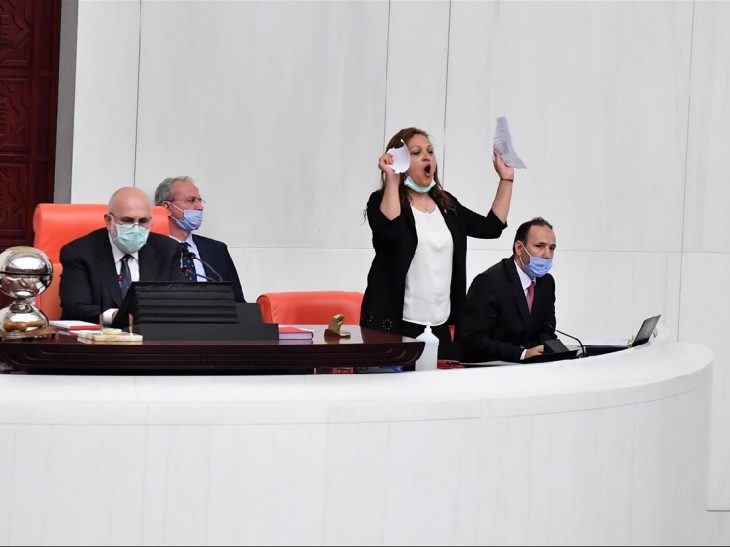
Turkey’s Press Freedom Under Siege After Journalist’s Death
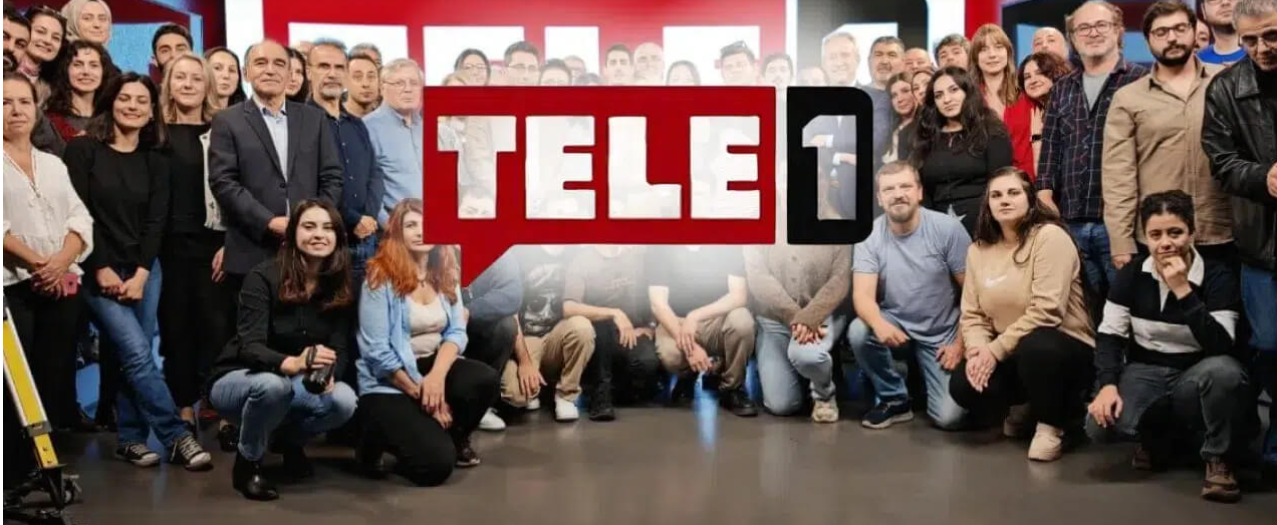 tele1
tele1
The killing of reporter Hakan Tosun highlights a deepening crackdown on journalists amid political arrests and state control of media.
A veteran Turkish journalist, Hakan Tosun, died on October 13, three days after being assaulted in a street attack in Istanbul. Two suspects have been detained, though the motive remains unclear. Several political groups suggested the assault may have been linked to Tosun’s reporting on human rights and environmental issues.
His death has reignited fears about the growing dangers facing journalists in Turkey, where press freedom has sharply deteriorated in recent years.
According to Reporters Without Borders (RSF), Turkey ranks 159th out of 180 countries in its global press freedom index. Since 2013, around 170 journalists have been killed, detained, or gone missing.
A new wave of repression after İmamoğlu’s arrest
The latest democratic crackdown has intensified following the arrest of Istanbul Mayor Ekrem İmamoğlu in March 2025, a leading opposition figure and frequent critic of President Recep Tayyip Erdoğan.
Reporters and editors have since been targeted in related police raids, reviving memories of earlier purges of independent media.
Working as a journalist in Turkey has long been perilous. The 2007 assassination of Hrant Dink, editor of the Armenian-Turkish newspaper Agos, remains emblematic of impunity. Retrials earlier this year resulted in nine life sentences against former officials and accomplices.
Similarly, Güngör Arslan, editor of the Ses Kocaeli outlet, was shot dead in 2022 outside his office. Both the shooter and the businessman who ordered the attack were sentenced to life imprisonment in 2023.
Mabel Matiz Faces Obscenity Charges as Turkey Tightens Cultural Clampdown
Wider pattern of intimidation and criminalization
Beyond physical violence, Turkey’s government has institutionalized repression through legal and regulatory means.
In 2022, a new law allowed courts to sentence anyone accused of “spreading disinformation” to up to three years in prison—a measure widely seen as targeting critics ahead of the elections.
Journalists such as Ahmet Şık, Ahmet Altan, and Can Dündar have each faced prolonged imprisonment or exile for their reporting on corruption and national security issues.
-
Ahmet Şık, twice jailed on terrorism charges, later won a ruling from the European Court of Human Rights, which found his detention unlawful.
-
Ahmet Altan, arrested in 2016, spent over four years in prison before his release in 2021.
-
Can Dündar, the former Cumhuriyet editor, lives in exile after being sentenced in absentia to 27 years over coverage of MIT’s weapons transfers to Syria.
-
In 2022, TV host Sedef Kabaş was sentenced to two years and four months for “insulting the president,” though her sentence was later suspended.
Three pillars of Erdoğan’s media control
Over more than two decades in power, Erdoğan’s government has developed three main mechanisms to consolidate control over Turkey’s media:
-
Forced takeovers and trusteeships: Courts seize critical outlets, replace management with state-appointed “trustees,” and swiftly shift editorial lines. Outlets such as Bugün TV, Kanaltürk, and Zaman were taken over between 2015–2016.
-
Pro-government ownership concentration: Politically connected conglomerates acquire major media companies, aligning coverage with state narratives.
-
Sabah-ATV was sold in 2008 to the Çalık Group, then led by Erdoğan’s son-in-law Berat Albayrak, and later transferred to Kalyon Group.
-
In 2018, Doğan Media Group — owner of Hürriyet, CNN Türk, and Kanal D — was sold to Demirören Holding, a staunchly pro-government business family.
-
-
Regulatory and financial pressure: The RTÜK broadcast regulator and state advertising agency BİK routinely issue fines and ad bans against critical channels such as Tele1, Halk TV, and Evrensel.
Expanding state media reach
While independent voices face censorship, Ankara has heavily funded state media, notably TRT World, to project the government’s narrative abroad.
Since its 2015 launch, TRT World has expanded bureaus in London and Washington, growing its 24-hour digital, television, and social media operations. Its coverage now shapes foreign perceptions on Ukraine, the Middle East, and migration, reinforcing the government’s strategic messaging while limiting dissent at home.
Muted Western response
Despite the ongoing repression, Western governments have softened their criticism. Analysts note that Turkey’s pivotal role in NATO, its mediation efforts in the Ukraine war, and its cooperation on refugee management have muted Western responses to Ankara’s democratic backsliding.
Moreover, under President Donald Trump, the United States itself has repeatedly clashed with the media, undermining Washington’s ability to champion global press freedom.
Unless Turkey’s allies make media freedom a condition of diplomatic engagement, observers warn that this asymmetric information environment—where domestic dissent is silenced and state narratives dominate—will persist.
Related articles
Turkey Warns Black Sea Tensions Could Spill Over as Tanker Strikes Raise Alarm
The night Turkey marched against Erdogan’s crackdown
Moody’s revises Turkey’s outlook to positive on decisive change in economic policy