Kurdish Leader on the Peace Process: “By targeting the CHP, the rift has deepened”
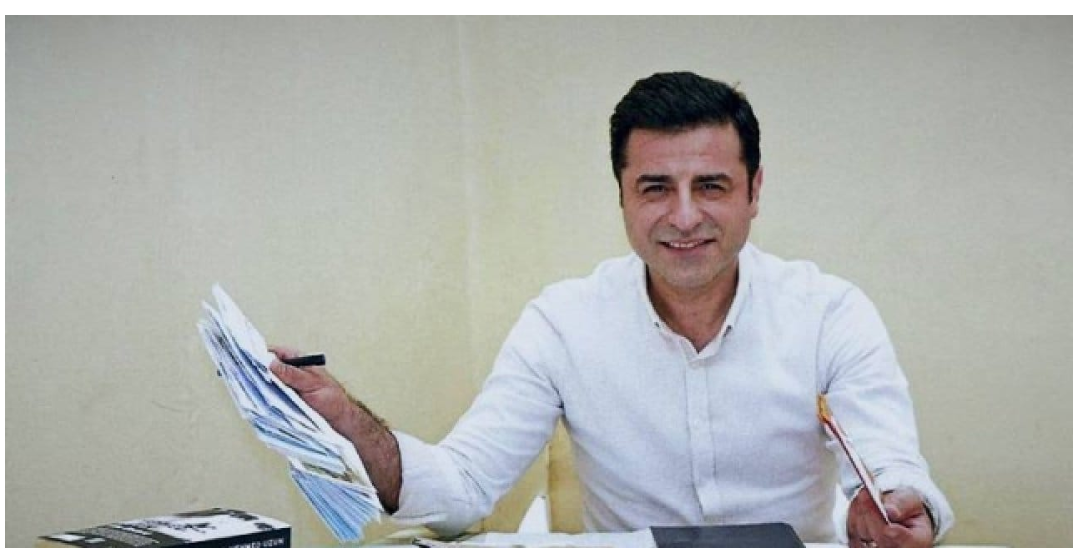 selahaddin demirtas
Former co-chair of the Halkların Demokratik Partisi (HDP), currently jailed, Selahattin Demirtaş has penned a reflection on the reconciliation process in which he argues that operations against the Cumhuriyet Halk Partisi (CHP) and other actions have exacerbated social divisions. In his article, titled “The reckoning of the process: What could we have done or can we do?”, he sets out how the government mis-handled key steps and lists what he sees as necessary future actions. T24+1
Government steps, but unity falls by the wayside
Demirtaş acknowledges that in the past year significant milestones were achieved under the joint unfolding of figures including Recep Tayyip Erdoğan, Devlet Bahçeli and Abdullah Öcalan — such as the withdrawal of arms, establishment of a parliamentary committee and the congress of the PKK. But he argues that despite these “positive and historic moves”, the process remains defined far too narrowly by security considerations. He writes:
“The key concept of the process is not ‘weapon’ but ‘brotherhood’. The weapon injured and scarred the brotherhood law… but no single effective, results-achieving step was taken to rebuild the law of brotherhood or the feeling of it.” T24+1
He says that if “we think the process consists only of security and that security is only about weapons, we have not understood either the concept of security or the process the way we understand it.” dokuz8HABER
Mistaken targets widen the division
Demirtaş argues that rather than building solidarity between Kurdish and Turkish communities, recent operations have deepened fractures — particularly with the CHP being singled out, trusteeships not reversed for municipalities, and sick or political prisoners remaining behind bars. He writes:
“The CHP was placed in the cross-hairs: ‘absolute nullity, cancellation, detention, trusteeship, espionage, bribery’ operations have deepened the separation. Thirty-year prison sentences have been issued, political prisoners, even sick prisoners could not leave jails. Without strengthening Kurdish–Turkish brotherhood, on top of that the Turkish–Turkish separation was added.” T24+1
He continues:
“I see this from my twelve-square-metre cell and I grieve. Our single companion through the day is Diyarbakır Metropolitan Mayor Dr. Adnan Selçuk Mızraklı, unjustly detained for six years… I hold our hope, I keep our resolve. We know, we believe, we struggle. Peace and brotherhood will surely win.” T24+1
A reform agenda focused on feeling rather than law
In the piece he lays out a long list of symbolic and practical proposals for reconciliation: state and party leaders visiting each other’s symbolic sites, joint sporting events, bilingual cultural programmes, and educational reforms including Turkish-Kurdish dictionaries and textbooks.
He emphasizes:
“What we need before laws is emotional unity. Law is not made in parliament first—law is made in the people, in the heart, in the consciousness. If there is no feeling, crafting laws will both fail and contradict the will of the people.” dokuz8HABER
Why the warning matters
By targeting CHP and other political actors rather than building broader social bridges, Demirtaş warns that the process has shifted from being a genuine peace and reconciliation framework into a more polarising one. His critique strikes at the heart of Turkey’s internal dialogue about how to move beyond decades of conflict.
Key words: Selahattin Demirtaş, HDP, reconciliation process, CHP operations, Kurdish-Turkish brotherhood, Türkiye inner politics.
Meta description: Imprisoned HDP leader Selahattin Demirtaş argues that by targeting CHP and neglecting emotional reconciliation, the process has deepened societal divisions rather than healed them.