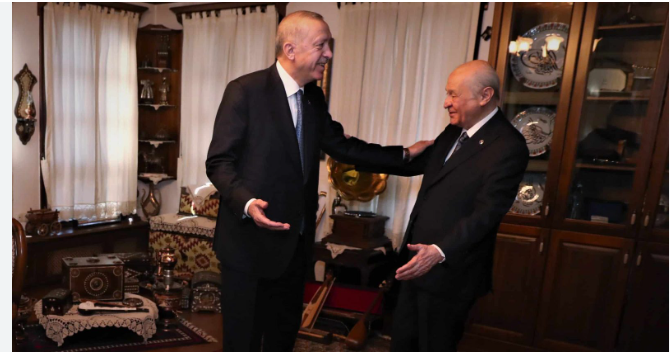
Mitsotakis: Turkey Not Eligible for SAFE Program While Casus Belli Stands
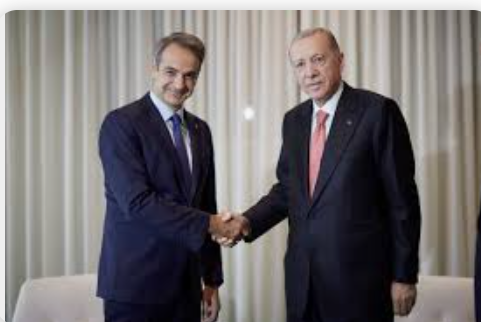 rte mitsotakis
Greek Prime Minister Kyriakos Mitsotakis said Turkey cannot join the European Union’s new Strategic Air Defence of Europe (SAFE) program as long as it maintains its “casus belli” against Greece and disputes the sovereignty of Aegean islands. Cyprus has also formally opposed Turkish participation.
“No participation while threat of war remains”
Speaking at the EU Summit in Brussels on Friday, Mitsotakis reaffirmed that Ankara does not meet the political conditions for joining the SAFE defense framework.
“As long as Turkey keeps a standing casus belli against Greece and questions the sovereignty of Greek islands in the Aegean, we obviously cannot agree to such participation,” Mitsotakis said.
The Greek leader added that he would “welcome a change of attitude from Ankara” but does not foresee it in the near future.
“I wish Turkey would change its mind so that we could engage in substantive discussion, but I do not expect this to happen anytime soon,” he noted.
Building a common European defense policy
Mitsotakis highlighted what he described as “historic progress” in shaping a common European defense policy, emphasizing that the SAFE program is now a flagship EU initiative.
“We have taken important steps toward implementing a joint defense policy with the integration of the national escape clause and the promotion of the SAFE program,” he said.
He also underscored that European defense must “protect all borders, not only those in the east,” calling this a vital development for continental security.
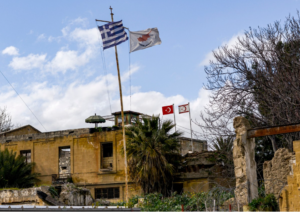
Cyprus confirms EU veto on Turkey’s participation
Cyprus joined Greece in blocking Ankara’s bid. President Nikos Christodoulides said the EU formally accepted Nicosia’s position during Thursday’s European Council meeting.
“I am pleased that our stance has been adopted,” Christodoulides stated. “No third country occupying territories or threatening member state security can participate in any EU financial instrument for defense or security.”
Cypriot Defense Minister Vasilis Palmas also told reporters that he had expressed Cyprus’ “clear disagreement” with Turkey’s inclusion during meetings with EU foreign affairs chief Kaja Kallas and defense commissioner Andrius Kubilius.
“We raised our concerns and underlined that Turkey’s participation in SAFE is unacceptable,” Palmas said.
Greece reiterates its veto threat
Athens has made clear that it will veto any attempt to include Turkey in the EU’s defense procurement mechanism unless Ankara rescinds the 1995 parliamentary resolution that designates any Greek expansion of territorial waters in the Aegean beyond 12 nautical miles as a casus belli, or act of war.
Greek foreign ministry spokeswoman Lana Zochiou reaffirmed this stance:
“As long as the casus belli remains, Greece will not accept Turkey’s participation in SAFE. Lifting it is a necessary precondition for discussions to begin.”
Turkey’s SAFE bid and NATO backing
Turkey formally requested to join the SAFE program last month, seeking access to part of the EU’s €150 billion defense fund.
The SAFE initiative is open to all EU member states, as well as several associated countries: Iceland, Norway, Liechtenstein, Switzerland, Ukraine, the UK, Japan, South Korea, Albania, Moldova, and North Macedonia.
Turkey’s participation, however, requires unanimous approval by all EU members — effectively granting Greece and Cyprus a veto.
NATO Secretary-General Mark Rutte has reportedly voiced support for Ankara’s involvement, arguing that EU–Turkey cooperation “strengthens NATO cohesion.” But EU diplomats acknowledge that “political resistance from Athens and Nicosia remains the decisive obstacle.”
Funding and strategic implications
Under the SAFE mechanism, member states must submit procurement plans by November 30, with spending spread over five years. The European Commission has allocated €150 billion for the initiative, from which 19 EU countries, including Cyprus, are expected to benefit.
Cyprus alone has secured over €1 billion in funding for defense hardware and military modernization.
Ankara’s diplomatic restraint signals new strategy
Analysts say Turkey’s pursuit of participation in SAFE reflects a broader recalibration in Ankara’s European diplomacy, even as tensions with Greece and Cyprus persist.
President Recep Tayyip Erdoğan’s muted reaction to the landslide victory of a pro-European leader in northern Cyprus earlier this month is seen as part of this strategy.
“Erdoğan’s restraint shows that Ankara wants to keep communication channels with Brussels open — particularly on defense and technology partnerships,” said one EU-based diplomat.
However, the same source cautioned that “Ankara’s ambitions will remain blocked as long as it refuses to revise its stance on Aegean sovereignty and Cyprus.”
Related articles
IMF on TURKEY: Slower growth, disinflation on the horizon, but many downside risks to economic stability

Fitch raises Turkey’s credit rating, the country is heading for a currency crisis
Erdogan claims Turkish contacts with UAE have made progress