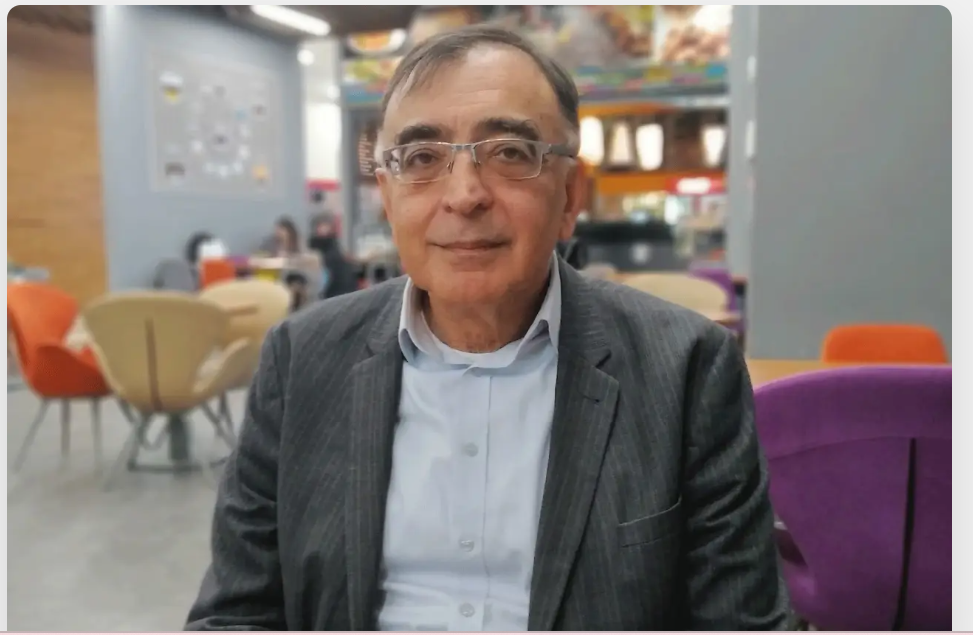
The State Becomes Turkey’s Biggest “Conglomerate” as State Fund TMSF Seizes $10 Billion in Assets
 tmsf-eng
The State as the Largest Holding
Turkey is witnessing a dramatic and unprecedented surge in state intervention into the private sector, leading commentators to suggest that the Savings Deposit Insurance Fund (TMSF) has effectively become the nation’s largest company.
The recent wave of high-profile arrests and TMSF appointments of trustees to private companies has sparked intense debate regarding the underlying motives, transcending mere legal enforcement to touch upon deep political and economic fractures. This activity follows earlier police operations targeting opposition-led municipalities and the March 19 detention of Istanbul Metropolitan Mayor Ekrem İmamoğlu (a prominent opposition figure), suggesting a complex, multi-layered strategy at play.
The sheer scale of the operation—with the TMSF now managing assets worth over $10 billion across more than 1,000 companies—is raising severe concerns among economists regarding the stability of property rights and the erosion of investor confidence.
Turkey Is Underperforming Emerging Markets Despite Reform Pledges
The Timeline of Operations: From Fintech to Defense
The concentration of corporate seizures intensified throughout 2025, often targeting individuals and companies previously known for their proximity to the ruling AKP and MHP parties:
| Date | Target/Event | Allegations & Outcome | Significance |
| March 19 | IBB President Ekrem İmamoğlu | Arrested (later released) | Preceded corporate focus, signaled broader political tension. |
| May 27 | Papara (Fintech) | Illegal betting and money laundering (up to 12 billion TRY). | TMSF appointed as trustee; 15 suspects detained. |
| August | Assan Group (Defense/Industry) | Military espionage and FETÖ ties. | Owner Emin Öner and GM detained; TMSF appointed as trustee to 10 group companies. |
| August | Rezan Epözdemir (Lawyer) | Bribery, FETÖ assistance, and espionage. | Linked by commentators to internal AKP rivalries. |
| September | Can Holding | Organized crime investigation. | 11 out of 26 suspects detained, including Chairman Kenan Tekdağ and former university Rector Remzi Sanver. |
| October | Paramount Hotel / Mansimov case | Money laundering, forming a criminal organization, usury. | Latest phase of a long-running saga involving businessman Mübariz Mansimov and organized crime allegations. Businessmen Cihan Ekşioğlu, Çağlar Şendil, and Sinan Görkem Gökçe arrested. |
The fact that the operations have swept across critical and lucrative sectors—from fintech and defense to media (Can Yayın Holding) and tourism (Paramount Hotel)—underscores the broad economic impact. The seized assets include shares in established companies like TEKFEN, as well as Kasımpaşa Sports Club.
State Prosecutors Seek Centuries-Long Prison Terms for CHP Mayors in Organized Crime Probe
Economic Interpretation: Two Major Scenarios
Economists are deeply concerned by the lack of clarity and the implications for the rule of law. Economist Hayri Kozanoğlu outlines two primary scenarios driving the operations:
Scenario 1: The “Clean Society” Pivot
The first possibility is that the government is attempting a major pivot to reassure the electorate—following the political turbulence sparked by the March 19 operations—that its pursuit of corruption and money laundering is sincere. In this reading, the crackdown on businessmen close to the government is an effort to legitimize prior controversial actions taken against opposition figures and institutions.
Scenario 2: State-Orchestrated Capital Transfer
The second, more cynical interpretation suggests the seizures are aimed at re-allocating capital to groups more closely aligned with the current regime. This theory posits that the government is leveraging allegations of crime (or terrorist links, like FETÖ) to seize assets, mirroring practices used after the 2016 coup attempt, and subsequently transferring wealth to friendly business circles.
State-Led Restructuring of Capitalism
Economist İnan Mutlu offers a complementary, structural perspective, arguing that the process goes beyond mere political skirmishes:
“The current process, which advances through the TMSF appointing trustees to companies, can essentially be viewed as the state-led restructuring of Turkish capitalism that is experiencing a profitability crisis.”
Mutlu recalls a similar period during the 2001 banking crisis, where the state restructured the economy using bad bank debts as justification. Today, the justification has shifted to allegations of terrorism, organized crime, and money laundering.
He points out that the legislative groundwork for this crackdown was laid in February 2025, when a bill was passed allowing the TMSF to be appointed as a trustee to companies with strong suspicion of using criminal proceeds. Furthermore, Mutlu highlights a highly sensitive political detail: the presidents of TÜSİAD (the leading Turkish business association) and YİK (the Foreign Investors Association) were detained and are currently facing trial for having objected to this new law—suggesting the entire operation was prepared well in advance.
The Fate of Seized Assets: Nationalization or Sale
A critical question remains unanswered: what happens to the seized companies? Mutlu emphasizes the two historical precedents for TMSF-managed assets:
- Nationalization: The companies could be transferred to the Turkey Wealth Fund, effectively nationalizing them under state control.
- Sale to Allies: The TMSF could put the companies up for sale, allowing them to be transferred to other, likely well-connected, capital groups. Mutlu notes that auctions for some companies have already begun.
Conclusion: Investment Confidence Crisis
The collective weight of these operations—the mass arrests, the seizure of over $10 billion in corporate assets, and the targeting of major business figures—sends a deeply worrying signal to the international investment community. The current state-led restructuring of capital, regardless of whether its primary motive is genuine anti-corruption or capital transfer, significantly erodes investor confidence by making property rights and judicial risk unpredictable. For foreign investors, the fear of arbitrary corporate seizure adds a layer of systemic risk that is difficult to price, further complicating Turkey’s already fragile economic recovery efforts.
Related articles
Defense from Halkbank: Guilty verdict will directly harm Turkish sovereign
Moody’s Warns Political Tensions Threaten Turkey’s Economic Gains

Credit Card Scam on Social Media Traps Debtors in Money Laundering