Will Turkey’s Judiciary Risk a Political Earthquake Over the CHP Case?
 chp1
chp1
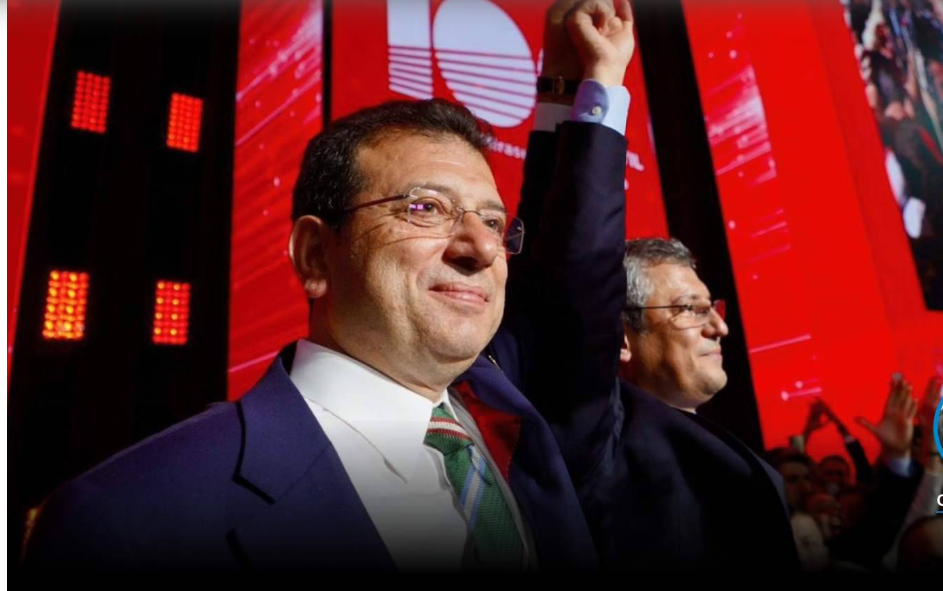
As Turkey awaits Friday’s (October 24) court ruling on the Republican People’s Party (CHP) congress, the outcome could reshape not only opposition politics but also the country’s fragile democracy and financial stability. Journalist Mehmet Tezkan warns that a “worst-case scenario” — annulling the party’s leadership election and stripping CHP leader Özgür Özel of his position — would amount to a declaration of war on democracy itself.
A Verdict That Could Shake Politics and Markets Alike
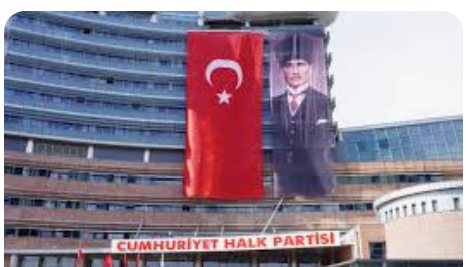
The case before Ankara’s 42nd Civil Court is no ordinary legal dispute. A decision to declare the CHP’s last congress “null and void” — effectively reinstating former leader Kemal Kılıçdaroğlu — could throw Turkey’s main opposition into turmoil.
Such a move could cost the CHP its state funding, reignite internal rivalries, and, in a worst-case scenario, prompt President Erdoğan to call an early election while the opposition is fractured.
Yet analysts caution that Erdoğan would not emerge unscathed. According to Bloomberg,
“A growing wave of political trials, operations against opposition figures, and state takeovers of municipalities are eroding the optimism that once surrounded Mehmet Şimşek’s reform agenda.”
Turkey no longer has enough “hot money” to trigger an outright balance of payments crisis. But if political tensions push households to dump lira for dollars, the Central Bank (CBRT) will struggle to defend the currency amid soaring inflation.
A more dramatic scenario — such as the arrest of Özgür Özel, a possibility mentioned by Tezkan — could spark capital flight and destroy what remains of investor confidence. Ironically, Erdoğan could find himself losing even a snap election in such an environment.
Judicial Showdown in Turkey: CHP Dismisses Annulment Fears Ahead of Crucial “Convention Fraud” Trial
The Three Dangerous Questions
In his column, Mehmet Tezkan recounts how three questions dominate public debate this week:
-
Will the court issue a “null and void” (mutlak butlan) ruling against the CHP?
-
Could Özgür Özel and his allies lose their parliamentary immunity?
-
And, in a whisper — could Özel, like İmamoğlu, be detained or jailed?
Tezkan’s initial reaction is defiant:
“Come on — is Turkey a banana republic? Yes, the government sometimes oversteps its limits, but this is still, in the end, a state governed by law.”
But his readers often push back: “We’ve seen too many things happen here that we once thought impossible.” Tezkan concedes the point, yet remains adamant that the worst-case scenario will not happen.
The Failed ‘Trustee’ Experiment
Tezkan recalls that the first attempt to interfere with the CHP’s leadership came through its Istanbul branch — via a controversial “trustee appointment” under a local court’s order.
The plan, he explains, was to empower single-judge civil courts while sidelining the Supreme Election Council (YSK), effectively tying the hands of the body that guarantees electoral legitimacy.
But the CHP’s local organizations fought back through legal channels, and the YSK intervened to protect democratic process and its own authority.
“We don’t know who exactly designed this big game,” Tezkan writes, “but it failed.”
A Direct Assault on Democracy
Declaring the CHP’s national leadership void just days before its congress would, Tezkan argues, be tantamount to a war on democracy itself.
When the Istanbul court appointed trustees, they insisted they were merely a “call committee” tasked with ensuring a “transparent congress.” Yet, as Tezkan notes, the Istanbul branch had already held its district and provincial congresses with YSK approval, making the trustees’ existence meaningless.
“If they are not true trustees and don’t intend to seize the party, they should resign,” he writes. “If not, the 45th Civil Court judge must end this farce. What purpose does prolonging this serve?”
The Political Gamble That Backfired
According to Tezkan, the entire scheme — designed somewhere within the corridors of power — has already backfired.
“They expected the CHP to split apart, but it united instead. They thought there would be infighting, yet the disgruntled members reconciled. They predicted a loss of credibility, but if polls are right, the CHP is now approaching 40 per cent support.”
He warns that trying to replay this failed strategy in Ankara, especially against CHP leader Özgür Özel, would be both futile and dangerous.
“Everyone sees it now — the judiciary, AKP politicians, even AKP voters. The Ankara court will see it too.”
Judiciary Under Pressure, But Still Holding the Line
Tezkan places cautious faith in the judiciary’s ability to resist political pressure.
He argues that while individual judges may act under influence, the YSK and higher courts have so far upheld the boundaries of law.
“Turkey may not be a perfect democracy, but it’s not yet lawless. In the end, the system still corrects itself — that’s what will happen this time too.”
Economic Stakes Too High for Political Adventurism
Beyond the legal and political ramifications, Tezkan highlights the potential economic fallout of an intervention against the CHP.
Foreign investors have already pulled back amid doubts over judicial independence. Domestic investors, he warns, could soon follow suit if political risk intensifies.
In his words:
“If a nullification ruling or an arrest of the opposition leader happens, there will be no crumbs of democracy left — and no reason for capital to stay in Turkey.”
He ends his column with restrained optimism:
“Rest assured, there will be no ‘null and void’ verdict. Özgür Özel’s immunity cannot be lifted, and he will not be jailed. If it happens, then democracy in Turkey is over — and we will all have to say goodbye to it.”
Analysis: The Stakes Go Beyond the CHP
Friday’s verdict is shaping up as a litmus test for Turkey’s judiciary — and for Erdoğan’s political judgment.
A harsh ruling might deliver a short-term blow to the opposition but would undermine Erdoğan’s claims of stability and accelerate capital outflows just as the Central Bank struggles to defend the lira.
If the courts hold the line, Turkey may preserve a sliver of institutional credibility — and, perhaps, the last remaining check on executive power.