U.S. Sanctions on Russian Oil Giants Send Shockwaves Across Asia — and Put Turkey in the Crosshairs
 rosneft-lukoil
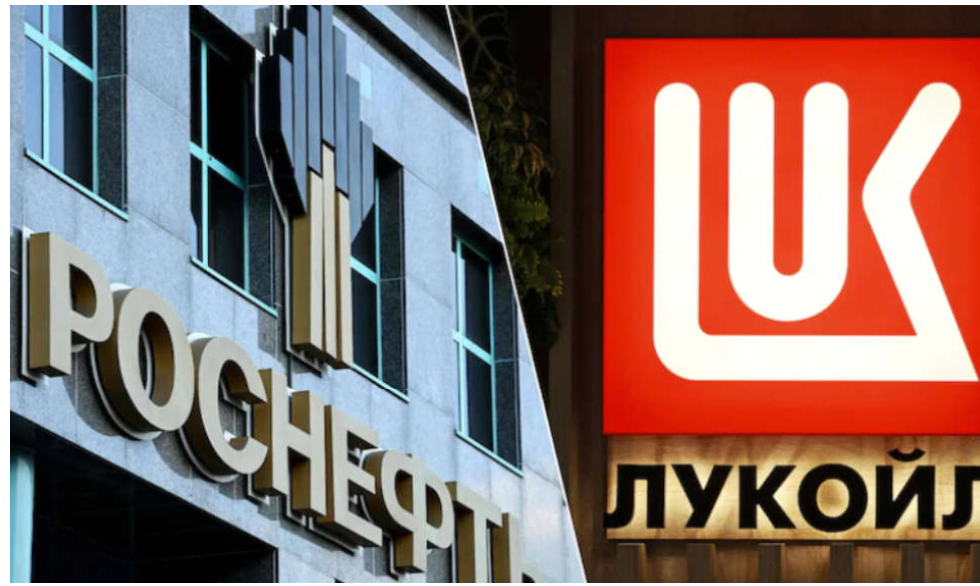
The Trump administration’s decision to blacklist Russian oil giants Rosneft and Lukoil has rattled global energy markets, sending tremors through China’s refineries, threatening India’s discounted supply deals, and raising fresh risks for Turkey — now one of Moscow’s key energy customers. Analysts warn that Washington’s threat of secondary sanctions could force Ankara to rethink its energy strategy or risk losing access to the U.S. dollar system.
China’s Refiners Under Pressure
The U.S. Treasury’s latest round of sanctions on Rosneft PJSC and Lukoil PJSC has forced Chinese refiners — both state-owned and private — to reassess their exposure to Russian crude. About 20% of China’s oil imports, or roughly two million barrels a day, come from Russia.
While state-owned CNPC’s long-term ESPO pipeline contract with Rosneft may continue due to its government-to-government structure, privately owned refiners in Shandong province face serious uncertainty. Any company found trading with blacklisted firms risks being cut off from the Western banking system and U.S. dollar transactions.
India Faces the End of Cheap Russian Crude
India, which has become Russia’s largest buyer of seaborne crude, now faces a painful dilemma. Refiners have been importing between 1.6 and 1.7 million barrels per day from Russia, benefiting from steep discounts that helped contain domestic fuel costs.
Under the new U.S. sanctions regime, Indian refiners must wind down transactions with Rosneft and Lukoil by November 21, 2025, or face secondary penalties. That could push Indian imports of Russian oil close to zero and add an estimated $3–5 billion to its annual energy import bill, forcing refiners to turn back to costlier Middle Eastern suppliers.
Chevron-Led Consortium to Resume Kazakh Oil Exports via Baku-Tbilisi-Ceyhan Pipeline
Turkey: A Critical Hub Under Growing U.S. Scrutiny
Turkey, the world’s third-largest buyer of Russian fossil fuels after China and India, finds itself in an increasingly precarious position. Ankara’s energy trade with Moscow has expanded sharply since 2022, as Western sanctions opened room for Turkey to act as a key transit and refining hub.
According to energy trade data, Turkey imported roughly 50,000 barrels per day of Russian crude in the first half of 2025 and processed about 106 million barrels annually of Urals-grade oil. But these volumes tell only part of the story: Turkey also imports substantial quantities of Russian refined fuels and natural gas.
The latest U.S. measures now place Turkish refiners, traders, and financial institutions under unprecedented risk. Any Turkish bank or trading house that facilitates oil sales involving Rosneft or Lukoil could face exclusion from dollar transactions or restrictions on Western financing — a devastating blow for a country whose energy imports are almost entirely dollar-denominated.
Energy analysts warn that Ankara may soon have to choose between cheap Russian energy and access to the Western financial system. The Turkish government’s balancing act — maintaining strong trade with Moscow while seeking to rebuild investor confidence in Western markets — is becoming harder to sustain.
If Turkish refiners abandon Russian suppliers, they would likely have to turn to Middle Eastern producers such as Saudi Arabia or Iraq, raising costs and complicating logistics. Moreover, Turkey’s role as a re-export hub for Russian oil products, refined in local facilities and shipped to third countries, could shrink significantly, reducing energy-related revenues.
Geopolitical Ripple Effects
The sanctions have already rattled markets from the Caspian to the Mediterranean. Traders report growing uncertainty around future flows from Russia’s Kozmino port and potential disruptions in supply chains linked to the Caspian Pipeline Consortium.
For Turkey, the timing is sensitive: the government is counting on stable energy flows to contain inflation and support its economic recovery plan. Any supply or financing shock could quickly spill over into the lira, balance of payments, and domestic fuel prices.
As Washington intensifies its economic offensive against Moscow, Ankara — much like Beijing and New Delhi — faces a strategic crossroads between economic pragmatism and geopolitical pressure.