Turkey’s Turnaround: How Erdogan Used Hamas to Reclaim the Middle East Stage
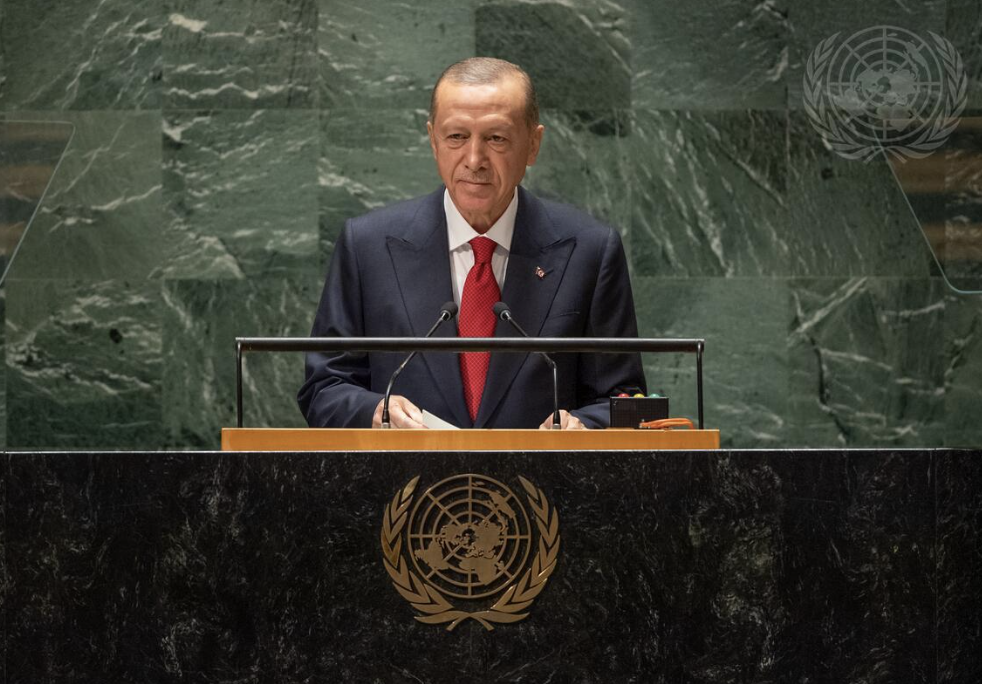 Erdogan UN speech
Once viewed in Washington as a diplomatic burden, Turkey’s relationship with Hamas has transformed into one of its most valuable geopolitical assets. By convincing the Palestinian group to accept Donald Trump’s Gaza ceasefire and hostage-release plan, Ankara has reasserted itself as a decisive power broker in the Middle East — a development that has unsettled Israel and several Arab rivals.
From Pariah to Power Broker
According to multiple sources cited by Reuters, Hamas leaders were initially unwilling to accept Trump’s ultimatum — release Israeli hostages or face continued bombardment. It was only after direct intervention from Turkey, which Hamas considers a political patron, that the group relented. Ankara’s message, delivered through intelligence chief İbrahim Kalın, was unambiguous: “The time has come to accept.”
“This gentleman from a place called Turkey is one of the most powerful in the world,” Trump said last week, referring to President Recep Tayyip Erdoğan after the deal was finalized. “He’s a reliable ally. He’s always there when I need him.”
Erdoğan’s signature on the Gaza document symbolized Turkey’s return to the regional spotlight, amplifying his long-term vision of restoring Ankara’s influence across the Middle East — a vision often framed in nostalgic references to the Ottoman era.
New Leverage in Washington
By delivering Hamas’s consent, Turkey has gained fresh diplomatic capital in Washington, according to Sinan Ülgen, director of Istanbul’s EDAM think tank and a senior fellow at Carnegie Europe. He said Ankara is poised to use this goodwill to advance three key objectives:
-
Reviving talks on stalled F-35 fighter jet sales,
-
Securing an easing of U.S. sanctions imposed over Ankara’s Russian S-400 missile purchase, and
-
Gaining American support in northern Syria against Kurdish forces linked to the PKK.
“If those laudatory statements from Trump translate into lasting goodwill,” Ülgen told Reuters, “Ankara could use that momentum to resolve some long-standing disagreements.”
Erdogan’s Washington Reset
The shift in tone between Ankara and Washington began earlier, during Erdoğan’s September 2025 visit to the White House — his first in six years. That meeting focused on unfreezing strained defense ties, including the S-400 dispute, and on Ankara’s demand to integrate the U.S.-backed Syrian Democratic Forces (SDF) into the Syrian army, effectively neutralizing what Turkey perceives as a terrorist threat near its borders.
That objective appears to be advancing: SDF commander Mazloum Abdi recently confirmed that discussions for such integration were underway — a strategic gain that Ankara views as a security victory.
Trump’s Gamble Pays Off
By turning to Erdoğan to break the Gaza stalemate, Trump effectively outsourced the region’s hardest diplomatic challenge to a leader with unique leverage over Hamas. Turkish negotiators assured Hamas that the ceasefire was guaranteed by both regional and U.S. authorities, with Trump personally providing the final assurance.
“The only real guarantee came from four parties: Turkey, Qatar, Egypt, and the Americans,” a senior Hamas official said. “Trump personally gave his word: release the hostages, hand over the bodies, and there will be no return to war.”
The deal, which freed dozens of Israeli hostages taken during Hamas’s October 7, 2023 attacks — killing 1,200 people — ended months of bloodshed that left over 67,000 Palestinians dead, according to Gaza health authorities.
Arab Unease and Ottoman Echoes
While the truce brought relief across the region, Arab capitals reacted uneasily to Ankara’s resurgence. Diplomats from Egypt, Saudi Arabia, and the UAE — long wary of Erdoğan’s Islamist leanings — privately acknowledged that Turkey’s new leadership role revived memories of Ottoman-era dominance.
“Erdogan is a master in expanding his influence, seizing opportunities, and turning events to his advantage,” said Arab political commentator Ayman Abdel Nour. “The Gulf countries were not happy about Turkey taking a leading role on Gaza, but they wanted this conflict to end.”
Lebanese analyst Sarkis Naoum added that while the ceasefire aligned with Arab interests, the “larger role given to Ankara was worrisome,” recalling centuries of Ottoman control over much of the Arab world.
Ankara’s Regional Ambition
For Erdoğan, the Gaza breakthrough marks a culmination of a decade-long quest to reposition Turkey as a central actor in regional diplomacy. Having hosted Russia-Ukraine peace talks earlier in 2025 and played a role in post-Assad Syria, Ankara is now positioned as a critical mediator between the West and the Muslim world.
Whether this newfound influence will endure depends on how Turkey balances its alliance with Washington against its fraught relationships with Israel and the Arab Gulf states. But for now, the Gaza deal has delivered Erdoğan what he has long sought — global acknowledgment of Turkey as a decisive regional power capable of shaping outcomes from Gaza to Damascus.
Related articles
Turkey Freezes Iran-Linked Assets as Halkbank Braces for U.S. Supreme Court Ruling
Turkish, US officials gather to dissect Ukraine war, F-16 deal
Columnist Claims U.S. ‘Approved’ Dynasty for Türkiye, Citing Barrack’s Remarks