US Vice President Vance Praises Turkey’s ‘Constructive Role’ in Gaza Ceasefire Implementation
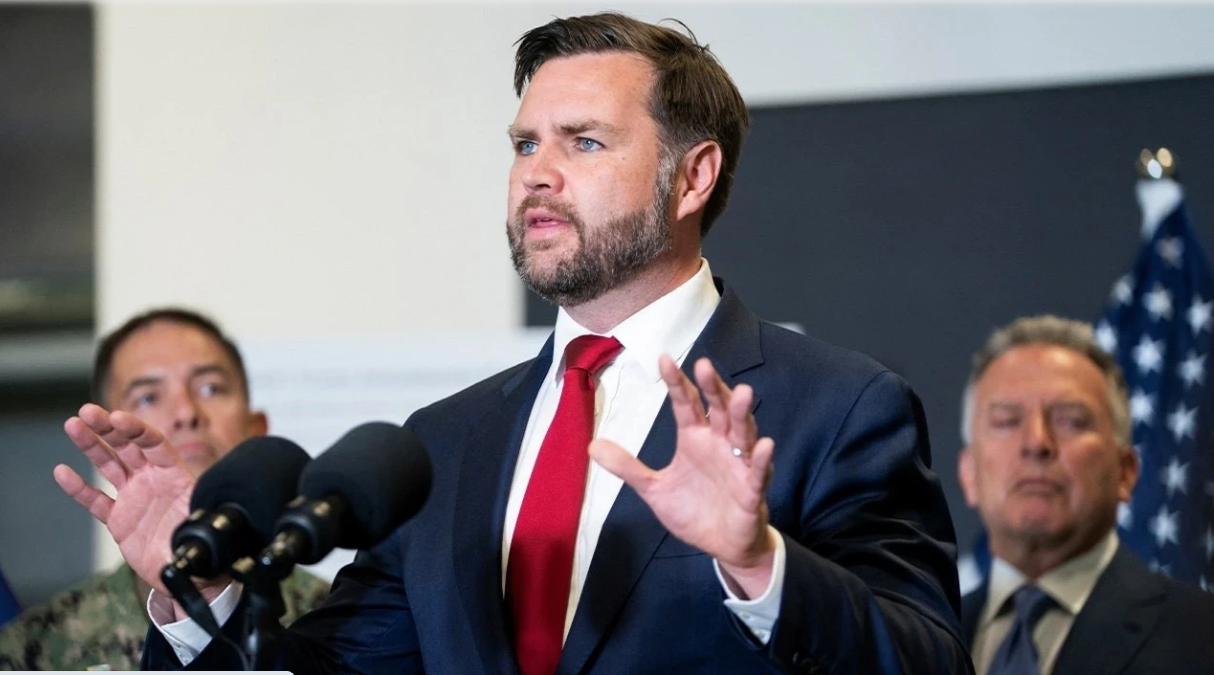 vance-us vp
Vance, flanked by Kushner and Witkoff, defends slow pace of truce, urges Hamas disarmament, and highlights Turkey’s diplomatic contribution; Officials hint at renewed political alliance.
TEL AVIV – U.S. Vice President J.D. Vance held a press conference at the center established by the U.S. and Israel to monitor the Gaza Strip ceasefire, following high-level meetings in Israel with President Donald Trump’s special envoy for the Middle East, Steve Witkoff, and senior advisor Jared Kushner. Vance defended the fragile truce, stating that the process is moving forward despite intermittent violations, which he called normal given the long history of conflict. Crucially, Vance specifically acknowledged and praised Turkey’s “constructive role” in the implementation of the ceasefire agreement.
Vance Outlines Three-Step Ceasefire Plan
Vice President Vance outlined the key processes for the Gaza ceasefire plan: Hamas disarmament, the deployment of an International Stabilization Force, and the establishment of an alternative administration in the Gaza Strip.
Vance stressed that while Israel and some Gulf nations are exhibiting impatience regarding Hamas, flexibility is necessary as the process will take time. He emphasized that U.S. troops will not be deployed in Gaza.
Responding to questions about the composition of the international military force, Vance said the U.S. would not “force any specific foreign powers” upon the Israelis, noting that different nations will play different roles: financing, reconstruction, communication, or on-the-ground troops.
“The Turks, in this sense, have played a constructive role so far, and we are grateful for that,” Vance stated, suggesting Turkey could facilitate communication and de-confliction between parties. Vance also noted that finding the remains of Israeli captives in Gaza will be difficult, as some are buried “under mountains of rubble.”
Kushner: Plan is Functioning as Designed
Jared Kushner, who played a role in the truce negotiations, affirmed that the “plan is functioning as designed.” He noted improved coordination between the U.S., Israel, and international organizations on humanitarian aid delivery. Kushner also made clear that no reconstruction projects or financing will be provided to areas in Gaza still controlled by Hamas; only projects in Israeli-controlled regions are currently being evaluated. Special Envoy Witkoff echoed this optimism, stating the process is developing faster and more positively than expected.
Commentary: The Resurgent Trump-Erdoğan Nexus
Vice President Vance’s effusive praise for Ankara’s “constructive” role marks a significant shift, suggesting a transactional restoration of the relationship between Turkish President Recep Tayyip Erdoğan and U.S. President Donald Trump.
Assessment: During Trump’s previous term, the relationship was highly personalized, characterized by direct calls and transactional deal-making that often bypassed established diplomatic and security protocols. This dynamic appears to be reasserting itself. For Erdoğan, cooperating on the Gaza truce is likely viewed as a strategic opportunity to regain standing in the region, secure potential reconstruction contracts, and, critically, improve bilateral ties with Washington. For the Trump administration, Turkey’s participation offers a necessary diplomatic bridge to regional players, particularly given Erdoğan’s long-standing support for Hamas.
The public acknowledgment of Turkey’s role strongly suggests that Ankara is leveraging its participation in the Gaza process to seek relief on other contentious issues. The most prominent among these is Turkey’s formal request to the U.S. to drop the long-running Halkbank lawsuit in New York.
The Halkbank case involves charges that the state-owned Turkish bank helped Iran evade U.S. sanctions. The pursuit of this case has been a major irritant in U.S.-Turkish relations for years. Vance’s appreciation for Turkey’s Gaza role—and the concurrent reports of the U.S. considering an F-35 sale to Turkey—indicates that the Trump administration is now assessing a complex quid pro quo: Turkish support for the Gaza peace architecture in exchange for a resolution or favorable outcome in the Halkbank prosecution. This alignment underscores a political calculation where regional stabilization priorities are weighing heavily against judicial independence.
Related articles

Why Turkey remained “irrational”?
Rising Tensions Put Turkey and Israel on Potential Collision Course in Syria
Parth Satam: US Lays ‘Stealth Trap’ To Seal Multi-Billion F35 Deal With Turkey, Abandon S400s