A New Sunni-Islamist Axis? Turkey’s Role in Syria’s Military Buildup
 tr-israel-syria
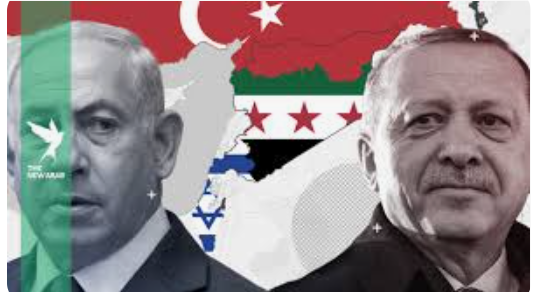
Turkey has emerged as the pivotal outside backer of Syria’s post-Assad order, channeling training, logistics and weapons to Damascus while seeking leverage over the country’s new power structure. By Yakoop Lappin..
Summary
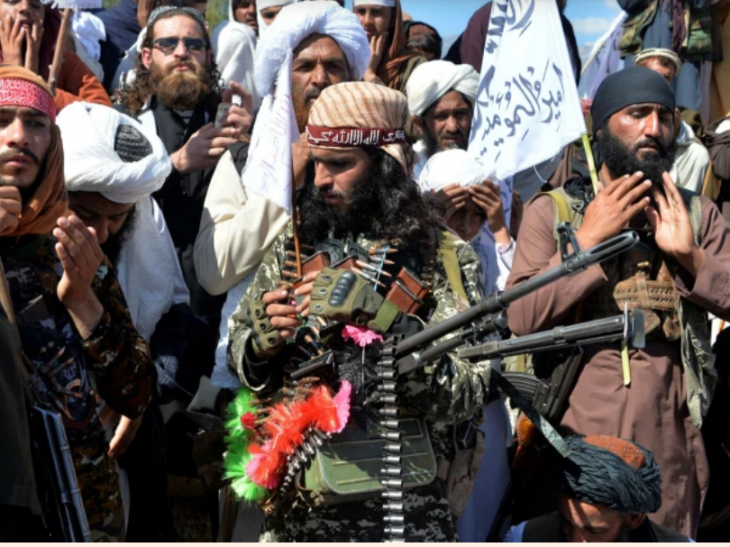
The December 2024 revolution that brought Ahmed al-Sharaa and Sunni rebel forces to power in Damascus upended Syria’s balance of alliances. As Russia and the Iran-led Shiite axis retreated, Turkey stepped into the vacuum, positioning itself as Damascus’s primary state ally and the chief architect of the new Syrian army through training, equipment and doctrine transfer.
Analysts say the strategy serves Ankara’s security priorities—especially pressuring the Kurdish-led SDF—and could, over time, pose new operational risks for Israel as Turkish systems proliferate in Syria.
Ankara Moves to the Center of Gravity
-
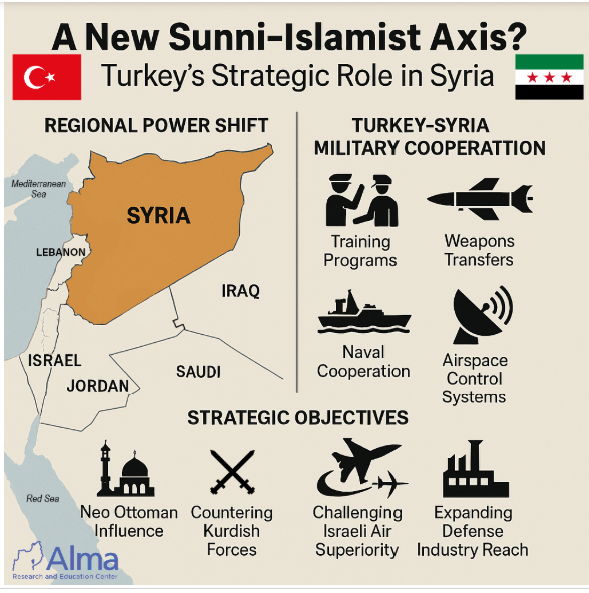
Security pact: A bilateral agreement signed in August 2025 deepened Turkish political and security influence, committing Ankara to supply munitions, logistics and technical support.
-
Training pipeline: Syrian defense sources say hundreds of soldiers and officers from the army and internal security bodies are training in Turkey on organization, command procedures and specific systems. Turkish technical teams visited Syria in August to assess needs.
-
Doctrinal shift: Instruction emphasizes NATO-style doctrine and aims to reduce dependence on Russian kit, integrating Turkish-made systems—notably in air defense. Syrian officers were documented in Gaziantep training on ASELSAN 35mm towed anti-aircraft platforms.
Force Generation and Scope
-
Headcount: The “new Syrian army” is estimated at ~100,000 personnel, largely drawn from former rebel militias; recruitment drives could lift the total to ~200,000. Minority regions such as Druze al-Suwayda and Kurdish-held northeast remain partial exceptions.
-
Beyond ground forces: A Syrian Navy delegation toured the Turkish Navy HQ in Kocaeli and the frigate TCG KEMALREİS, discussing longer-term maritime coordination.
-
Dual-use infrastructure: Turkey reportedly supplied air-navigation and control systems to Damascus International Airport (ILS and radar). Marketed as civilian, these upgrades enhance operational continuity for air operations in a crisis.
Systems in Play—and Israeli Concerns
Reports in September pointed to an airstrike targeting warehouses near Homs that allegedly stored Turkish-made missiles and air-defense assets—claims unverified but closely watched in Israel.
-
Separate reporting alleged IDF activity near al-Kiswah to dismantle Turkish espionage equipment and cited Israeli warnings that Damascus is “taking orders from Turkey.”
-
Open-source accounts in April said Turkey planned deployments of HİSAR-A/HİSAR-O at T-4 air base and even considered using the S-400 it purchased from Russia at sites near Homs/Palmyra—moves that would complicate Israeli air freedom of action.
-
Ankara’s stance on the SDF: Turkish MoD spokesperson Rear Adm. Zeki Aktürk said Ankara is “very sensitive” to any political legitimization or integration of the SDF—which Turkey views as the PKK’s Syrian affiliate—into Syrian state structures.
The Kurdish Front
Tensions between the new Syrian army and the US-backed SDF persist despite talk of integration. Localized clashes occur regularly, underscoring Damascus-Ankara alignment against Kurdish autonomy and suggesting continued friction even as Syria rebuilds national forces.
Ankara’s Motive Set
According to regional analysts, Ankara seeks to:
-
Project power and entrench a Sunni-state alignment in Damascus aligned with Turkish security doctrine.
-
Externalize costs and turn Syria into a long-term client of the Turkish defense industry (including UAVs, munitions and air defense).
-
Shape tasking so Syrian forces can act against Ankara-designated targets, notably the SDF.
Implications for Israel
-
Capability diffusion: Turkish systems in Syrian hands could erode Israel’s aerial latitude and raise response thresholds for cross-border operations.
-
New axis dynamics: With Damascus no longer under Iran’s sway, the map is fragmented: a Turkey-backed Sunni center, residual Iranian networks, and a US-backed Kurdish zone—creating both risks and opportunities for Israel’s containment strategy.
-
Policy challenge: Israel has signaled it won’t tolerate Turkish basing near its borders and will act to block a sustained Turkish military foothold in Syria. Whether Jerusalem is preparing for a longer contest with a Syrian-Turkish alignment remains an open question.
Bottom Line
Turkey’s hands-on role in building, equipping and formatting Syria’s new military is not merely logistical support. It is a strategic bet on a Sunni-led order in Damascus that serves Ankara’s anti-PKK/SDF priorities, widens its regional reach, and recalibrates Israel’s threat environment. The trajectory points to deeper Turkish imprint on Syrian forces, growing air-defense footprints, and a long-term test of Israel’s freedom of action.
PA Turkey intends to inform Turkey watchers with diverse views and opinions. Articles in our website may not necessarily represent the view of our editorial board or count as endorsement.
Follow our English language YouTube videos @ REAL TURKEY: https://www.youtube.com/channel/UCKpFJB4GFiNkhmpVZQ_d9Rg
And content at Twitter: @AtillaEng
Facebook: Real Turkey Channel: https://www.facebook.com/realturkeychannel/***
Related articles

Stats agency ordered by court to deliver inflation data
Inflation outlook: So bad, rate cut expectations may be postponed, CBRT forced to hike its CPI projections

Emil Avdaliani: Turkey’s Foreign Policy Balancing Act