Central Bank’s Hawkish Stance Keeps Interest Rates Elevated as Inflation Surges
 CBRT
CBRT
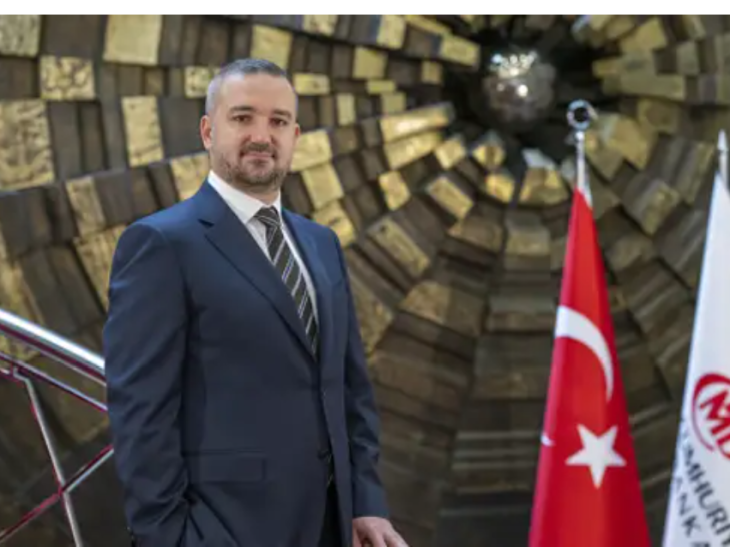
Turkish Central Bank (TCMB) Governor Fatih Karahan sent a clear message to markets this week, warning that “if the inflation outlook diverges from interim targets, further tightening will follow.” His hawkish remarks, coupled with September’s inflation rate of 3.23%, which surpassed expectations, have reshaped the outlook for interest rates and banking behavior. Instead of cutting rates, banks continue to maintain high levels on both deposits and loans, reflecting persistent uncertainty over Türkiye’s inflation trajectory.
Policy Rate Forecast Climbs to 39%
According to Economim, expectations for the year-end policy rate have risen to the 37–39% range, as markets anticipate inflation will finish well above the Central Bank’s 25–29% forecast band. Prior to the latest inflation data, analysts had expected a 250-basis-point rate cut at the October Monetary Policy Committee (PPK) meeting. Now, the consensus has shifted toward a smaller reduction of 100–150 basis points, with economists describing the upcoming meeting as a key test of the TCMB’s credibility and commitment to its interim inflation targets.
Banks Hold Deposit and Loan Rates Steady
The banking sector quickly priced in the possibility of a slower easing cycle. Despite discussions of potential rate cuts, deposit and lending rates remain elevated, signaling that financial institutions expect tight monetary conditions to persist through year-end.
Deposit Rates: Well Above Policy Rate
Banks are still offering “welcome” interest rates between 44% and 48%, significantly above the official policy rate of 40.5%. For existing clients, large lenders such as Garanti BBVA and Yapı Kredi continue to provide 42.5% and 41.5%, respectively — indicating that liquidity competition in the system remains intense. Analysts interpret this as a sign that banks are prioritizing deposit retention amid inflationary pressure and policy uncertainty.
Consumer Loans: High Rates Reflect Tight Credit Conditions
On the lending side, 12-month personal loan rates currently range from 3.99% to 7.49%, one of the broadest spreads seen in recent years. Economists note that such elevated borrowing costs were last observed during periods of financial stress, such as the market volatility following Istanbul Mayor Ekrem İmamoğlu’s arrest, which disrupted investor confidence earlier in the year.
Experts explain that the persistence of high consumer loan rates reflects not only the Central Bank’s tight policy but also macroprudential measures designed to curb credit growth. These include stricter capital requirements, loan-to-value limits, and risk-weight adjustments that collectively discourage excessive borrowing.
Economists Expect a Policy Pause Ahead
Analysts caution that Türkiye’s monetary authorities are approaching a delicate balance. “If inflation keeps overshooting, the TCMB may have to pause or even reverse planned rate cuts,” one senior economist told Economim. The 3.23% monthly rise in CPI implies that year-end inflation could approach mid-30% territory, leaving little room for premature easing.
The TCMB’s next PPK meeting in October is expected to be a critical juncture, as it will reveal whether policymakers remain focused on disinflation or bow to political and growth pressures. Given the current data, most economists predict a limited rate adjustment, followed by a longer period of steady or tighter policy to anchor expectations.
Market Outlook: Tight Conditions Likely to Persist
Financial markets now anticipate sustained high borrowing costs through the final quarter of 2025. The combination of sticky inflation, cautious policy guidance, and ongoing global rate differentials is expected to keep Turkish lira liquidity tight. Meanwhile, households and businesses are feeling the squeeze of higher financing costs, with consumer loans and mortgages becoming increasingly unaffordable.
As Türkiye navigates a fragile balance between growth and price stability, the Central Bank’s resolve will be tested in the coming months. For now, investors see Governor Karahan’s hawkish tone as a sign that monetary tightening is far from over, and that high interest rates may remain the new normal well into 2026.
Related articles

Timothy Ash: Turkey’s Economy Is on the Right Path, But Inflation Remains the Real Test
Turkey’s Inflation Expectations Show Sharp Divide Among Sectors
CBRT Governor Karahan: “Gold Hoarding Weakens Inflation Fight”