Poll: Support for Turkey’s “Terror-Free” Peace Process Rises, But Confidence in Success Fades
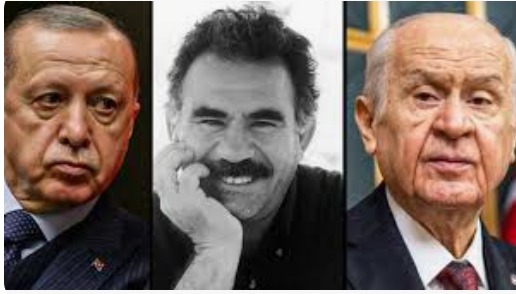 ocalan-rte-bahceli
Majority of Turks back efforts to end terrorism, yet skepticism grows over whether the initiative will actually work
Public support for Turkey’s new “Terror-Free Turkey” peace process has grown in recent weeks, according to a new poll by Gündemar Research. But optimism that the process will succeed in ending decades of violence has declined — reflecting a mix of hope and mistrust as political divisions deepen.
Bahçeli’s Initiative Gains Momentum Amid Political Debate
The initiative, launched on October 22 by Nationalist Movement Party (MHP) leader Devlet Bahçeli, aims to eliminate terrorism through a combination of parliamentary dialogue, legal reforms, and regional listening tours.
While occasional confrontations between government and opposition figures have sparked tension, both sides continue to engage in the process.
The survey results come as opposition parties — especially the Good Party (İYİ Party) — voice increasing criticism, warning that the government’s plan could repeat the pitfalls of past peace efforts with the outlawed PKK.
Growing Support for Ending Terrorism
According to Gündemar’s findings, 79% of respondents said they support the goal of ending terrorism completely, up from 74% in August.
Analysts view this as a sign of the public’s deep desire for stability after years of political polarization, economic hardship, and security concerns.
However, growing support for the concept of peace does not necessarily translate into faith in the process itself.
Most Turks Doubt the Process Will Succeed
The same survey shows a widening gap between hope and belief.
Those who think the initiative will successfully end terrorism increased slightly from 39% in August to 40% in September.
Yet, the share of respondents who do not believe the process will succeed jumped from 48% to 51%.
Political scientists say this reflects a broader pattern of “cautious optimism” — public support for peace but skepticism about the political will and leadership to achieve it.
“The data suggest the public wants to believe, but confidence is fragile,” one Gündemar analyst told local media. “People have seen too many failed processes before.”
Öcalan’s Possible Role Rejected by Two-Thirds of the Public
A key fault line in the debate is the potential involvement of Abdullah Öcalan, the imprisoned leader of the PKK.
Two-thirds of respondents — 66% in September, up from 60% in August — said it would be “wrong” for Öcalan to play any role in the current initiative.
This surge in opposition underscores the sensitivity of Öcalan’s name in Turkish politics, particularly among nationalist and conservative voters, even as Kurdish groups call for his inclusion in the dialogue.
Strong Rejection of Amnesty and “Hope Rights” for PKK Members
When asked whether PKK members should be eligible for amnesty under a potential general pardon, an overwhelming 76% of respondents said “no”, up from 73% in August.
Similarly, public opposition to granting “hope rights” (sentence reduction opportunities) to Abdullah Öcalan climbed to 79%, compared to 75% the previous month.
The findings indicate that while the public supports peace, it overwhelmingly rejects concessions perceived as rewarding militants or their leadership.
Experts: “Public Wants Peace, But Not at Any Cost”
Analysts say the mixed results reveal the public’s pragmatic approach: supporting peace talks, but within strict boundaries.
“Turks are tired of conflict, but they don’t want another one-sided compromise,” says a senior political researcher in Ankara. “This mood puts pressure on both the government and the opposition to manage the process transparently and within national consensus.”
The MHP’s leadership of the initiative — rather than the ruling AKP — is also seen as a strategic move to neutralize nationalist backlash while testing the public’s appetite for reconciliation.
Parallel Survey: CHP Leads as DEM Party Surpasses MHP
In a separate poll by ALF Research, conducted October 6–9 with 2,000 respondents nationwide, the Republican People’s Party (CHP) emerged as the top political force.
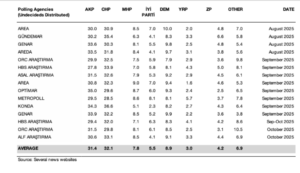
If a general election were held this Sunday, the results would be as follows:
-
CHP: 33.1%
-
AKP: 30.6%
-
DEM Party: 9.1%
-
MHP: 8.5%
-
Victory Party (Zafer): 4.4%
-
İYİ Party: 4.1%
-
New Welfare Party: 3.3%
-
Key Party (Anahtar): 1.8%
-
Workers’ Party of Turkey (TİP): 0.9%
-
Others: 4.2%
The survey marks a significant shift, with the pro-Kurdish DEM Party overtaking MHP for the first time since early 2024.
Political observers interpret this as a sign that Kurdish voters are regaining political confidence, while nationalist parties face internal divisions over how to approach the peace process.
Court Orders Larger Venue for CHP Congress Trial
Separately, the Ankara 42nd Civil Court overseeing the case to annul the CHP’s 38th Ordinary Congress (2023) and 21st Extraordinary Congress (April 2025) has requested that the upcoming October 24 hearing be held in a larger courtroom due to anticipated high turnout.
The trial, which could affect party leadership legitimacy, has become one of the most closely watched political cases of the year.
A Nation Divided Between Hope and Doubt
Gündemar’s latest findings highlight a defining paradox: Turkish society overwhelmingly wants an end to terrorism, yet lacks faith in the state’s capacity to deliver it.
While “Terror-Free Turkey” enjoys broad rhetorical support, the absence of a clear roadmap, continued political polarization, and disputes over Öcalan’s status risk undermining the process before it gains real momentum.
Still, the very fact that public support for peace continues to rise may encourage Ankara to sustain dialogue — especially amid economic uncertainty and regional instability.
Source: Gündemar Research, ALF Research, Cumhuriyet
IMPORTANT DISCLOSURE: PA Turkey intends to inform Turkey watchers with diverse views and opinions. Articles on our website may not necessarily represent the views of our editorial board or count as endorsement.
Follow our English language YouTube videos @REAL TURKEY: https://www.youtube.com/channel/UCKpFJB4GFiNkhmpVZQ_d9Rg
And on Twitter: @AtillaEng
Facebook: Real Turkey Channel https://www.facebook.com/realturkeychannel/