Turkey Emerges as a Regional Leader in Renewable Energy Expansion
 yenilenebilir enerji
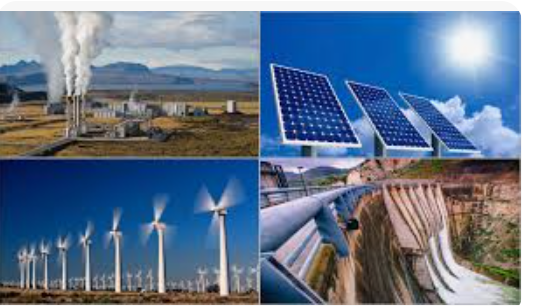
Turkey’s fast-growing renewable energy sector is reshaping its energy landscape, cutting dependence on fossil fuel imports and reinforcing its ambition to reach net-zero emissions by 2053. The country now leads the region in solar, wind, and hybrid energy development — and aims to become a major green energy hub for Europe.
From Energy Importer to Clean Power Innovator
Over the past two decades, Turkey has transformed its energy strategy, investing billions to diversify supply sources and reduce vulnerability to foreign imports.
Driven by energy security concerns and environmental goals, Ankara is now pursuing a net-zero target by 2053, prioritizing renewable energy, hydrogen, and electric mobility.
The International Energy Agency (IEA) notes that Turkey has modernized and liberalized its energy policies, rapidly expanding its domestic production capacity. Over the last decade, renewable electricity generation has tripled, while the government pushes ahead with the construction of the country’s first nuclear power plant in Akkuyu.
Solar Power Surges Ahead
A January 2025 report by Ember Energy showed that Turkey’s solar capacity doubled in just two and a half years — surpassing its 2025 target early.
New self-consumption installations drove 94% of that growth between July 2022 and the end of 2024, as total solar capacity jumped from 9.7 GW to over 19 GW.
Today, solar energy supplies about 6% of Turkey’s total electricity generation — a milestone that has significantly reduced energy import bills. Ember estimates that between mid-2022 and late 2024, solar and wind energy saved Turkey $15 billion in natural gas imports, strengthening its energy independence.
Expanding the Green Energy Pipeline
Turkey’s pipeline of 33 GW in pre-licensed, storage-integrated solar and wind projects now exceeds the government’s 2030 target of 2.1 GW by more than fifteenfold.
Analysts believe this momentum reflects both investor confidence and the country’s regulatory incentives for distributed and hybrid generation.
Ember highlights that Turkey could further capitalize on rooftop, hybrid, floating, and battery-integrated solar projects, sustaining its leadership in renewable expansion well into the next decade.
Installed Capacity Nears 121 GW
As of August 2025, Turkey’s installed renewable energy capacity reached 74 GW, while total electricity generation capacity hit nearly 120.8 GW, according to the Energy and Natural Resources Ministry.
Hydropower plants dominate with 27% of total output, followed by natural gas (25 GW), solar (24 GW), wind (14 GW), and domestic coal (11 GW). Biomass and geothermal power together contribute another 4 GW.
The ministry’s projections suggest that additional capacity will come from 8 GW of hybrid solar projects integrated into existing hydropower and wind plants — a key step toward balancing intermittent renewable output.
Meeting Rising Demand
According to the National Energy Plan, Turkey’s electricity demand is forecast to climb to 455 terawatt-hours in 2030 and 510 TWh in 2035.
Meeting that demand will require 17 GW of new capacity by 2030 and 27 GW by 2035, which policymakers aim to deliver primarily through renewable sources.
Wind Energy: Steady Growth and Investor Appeal
Turkey’s wind energy sector continues to attract strong investor interest. In 2024 alone, the industry received $1.3 billion in new investment, supporting 1.3 GW of capacity additions.
The Turkish Wind Energy Association projects investments to rise to $1.5 billion in 2025, bringing another 1.5 GW online. The commissioning of several new wind farms this spring has boosted both investor confidence and local supply chain capacity.
Europe Backs Green Hydrogen and Low-Carbon Transition
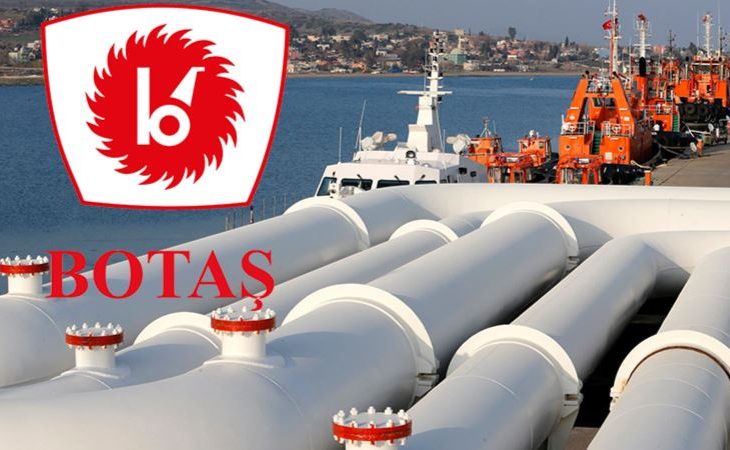
The European Union has pledged a $3.22 million technical assistance program to accelerate Turkey’s low-carbon transition in collaboration with state energy company BOTAS.
The initiative, titled “Boosting Green and Low-Carbon Hydrogen in Türkiye,” aims to expand institutional know-how and promote hydrogen development as part of Turkey’s long-term decarbonization strategy.
Electric Vehicles: A Fast-Accelerating Market
Turkey’s electric vehicle (EV) market has surged to become Europe’s fourth-largest, overtaking Belgium in 2025.
According to the Automotive Distributors’ and Mobility Association, EV sales tripled year-on-year in June — reaching 25,646 units, up from 8,032 a year earlier.
This rapid growth has been fueled by a favorable special consumption tax (ÖTV) regime and the success of domestic automaker Togg, whose T10X crossover hit the market in 2023.
Global manufacturers are following suit: in July 2024, China’s BYD signed a $1 billion deal to establish a new EV production facility in Turkey.
Toward a Green Energy Hub
With strong government backing, increasing private investment, and growing European cooperation, Turkey is on track to become a regional clean energy hub.
Its expanding renewable capacity, new hydrogen partnerships, and rapidly growing EV market reflect a comprehensive energy transition that blends industrial modernization with environmental responsibility.
If current trends continue, analysts believe Turkey could achieve full renewable energy self-sufficiency before 2053, positioning itself as a cornerstone of Europe’s wider green transformation.
Source: Oilprice.com
IMPORTANT DISCLOSURE: PA Turkey intends to inform Turkey watchers with diverse views and opinions. Articles in our website may not necessarily represent the view of our editorial board or count as endorsement.
Follow our English-language YouTube videos @REAL TURKEY: https://www.youtube.com/channel/UCKpFJB4GFiNkhmpVZQ_d9Rg
Twitter: @AtillaEng
Facebook: Real Turkey Channel: https://www.facebook.com/realturkeychannel/