Syria’s Peace Crucial for Turkey’s Reconciliation: Mazloum Abdi Meets Sharaa in Damascus After Aleppo Ceasefire
 el sara
Summary:
Stability in Syria remains indispensable for any lasting peace process in the region — and particularly for Turkey’s own reconciliation efforts. Hours after a ceasefire took effect in Aleppo, Syrian Democratic Forces (SDF) commander Mazloum Abdi arrived in Damascus to meet interim President Ahmed al-Sharaa, marking the most significant political contact between Kurdish and Syrian authorities since the fall of Bashar al-Assad’s regime.
Ceasefire Brings Temporary Calm to Aleppo
Tensions flared over the weekend as heavy clashes broke out in Aleppo’s Sheikh Maqsoud and Ashrafiyeh districts — areas with large Kurdish populations — between units loyal to Damascus and internal security forces under the SDF.
By Monday morning, relative calm had returned following the announcement of a localized ceasefire, which both sides agreed to uphold under international mediation. The latest violence was the fiercest since a March 2025 agreement between the two sides.
Syria’s state news agency SANA confirmed that the Syrian Arab Army had deployed additional troops to northern regions in recent days amid fears of a broader escalation.
Abdi Arrives in Damascus for High-Level Talks
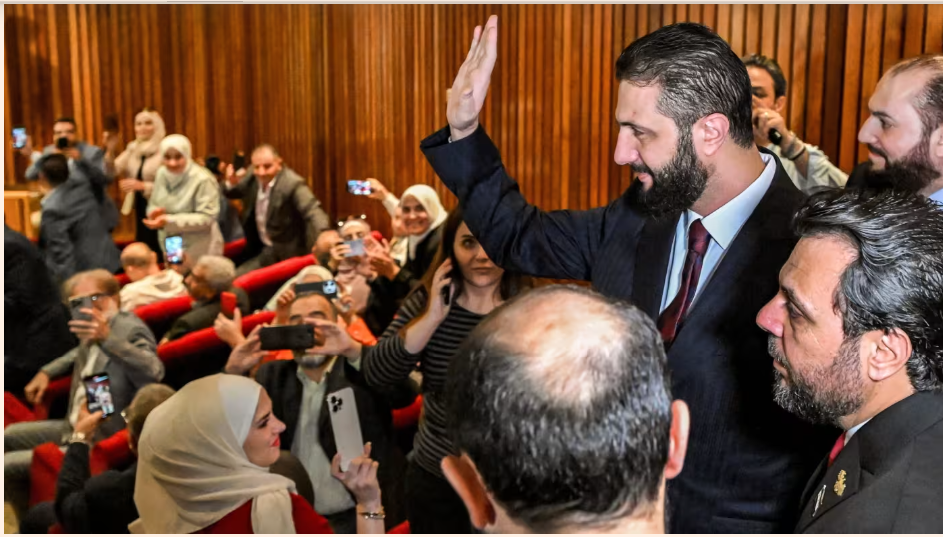
Just hours after the truce began, SDF Commander Mazloum Abdi and a high-level delegation from northeast Syria arrived in Damascus for talks with interim President Ahmed al-Sharaa and Foreign Minister Esad Shaybani.
The SDF delegation also includes Ilham Ahmed, co-chair of the Syrian Democratic Council’s Foreign Relations Committee, and Rohilat Afrin, commander of the Women’s Protection Units (YPJ).
According to sources cited by the ANHA news agency, the meeting aims to accelerate the implementation of the March 10 agreement signed between the SDF and Syria’s Transitional Government — a deal that envisaged integrating SDF forces into national institutions and establishing a framework for political representation.
US Involvement: Barrack and Cooper Maintain Quiet Oversight
The meeting follows a recent visit by US Special Envoy for Syria Tom Barrack and CENTCOM Commander Admiral Brad Cooper, who met Abdi and his team in northeastern Syria on October 6. Washington officials confirmed that Barrack would “observe” the Damascus talks in coordination with Egypt and the United Nations.
Diplomatic observers say the US is working to bridge mistrust between Kurdish authorities and the new Damascus leadership, while ensuring the ceasefire in Aleppo becomes the foundation for a broader political settlement.
UN Envoy Warns: “Syria Is on a Knife’s Edge”
UN Special Envoy Geir Pedersen warned in an interview with the Financial Times that Syria’s fragile transition risks unraveling unless President Sharaa accelerates reforms and curbs sectarian violence.
“Syria is on a knife’s edge,” Pedersen said, adding that the slow pace of judicial and security reforms has created “nervousness and uncertainty” within the country.
“In a worst-case scenario, Syria could turn into Libya — no one wants it to happen, but it’s a real danger,” he warned, referring to the factional chaos that consumed Libya after 2011.
A Fragile Transition Under Sharaa
Nearly a year after Ahmed al-Sharaa led the rebel offensive that toppled Assad’s decades-long regime, hopes for a unified, inclusive Syria have given way to renewed tensions.
Sharaa, a former leader of the Islamist-leaning Hayat Tahrir al-Sham (HTS), promised to build an inclusive government that protects all ethnic and religious groups. Yet, HTS remains the dominant force in parts of northern Syria, undermining trust in the new administration.
Sectarian clashes in Latakia in March left more than 1,400 people dead, while similar violence erupted in Sweida in July involving Druze, Bedouin, and security forces.
Israel further complicated the situation by launching airstrikes against Sharaa’s forces in Damascus and along the southern border, claiming to defend the Druze community. “People are asking whether Sharaa can even control his own forces,” Pedersen said.
Kurds Demand Guarantees as Integration Stalls
The March agreement called for the integration of roughly 60,000 SDF fighters into Syrian state structures, but little progress has been made.
According to experts, recent violence in Latakia and Sweida has deepened mistrust between the SDF and Damascus. “Sharaa clearly wants to grant Kurdish political rights,” Pedersen noted, “but recent sectarian clashes and Israeli airstrikes have made mutual confidence harder to rebuild.”
Judicial Reform and Transitional Justice: The Real Test
The UN has urged Damascus to launch a transitional justice process addressing crimes committed both under Assad and by Sharaa-affiliated forces. Sharaa has reportedly agreed to allow an independent UN commission to investigate the Sweida clashes, but concerns remain about his appointment of sharia-based judges from Idlib’s HTS strongholds into the national judiciary.
Pedersen acknowledged Sharaa’s pragmatism but said the president must now “reassure Syrians that this is a new beginning — not a new autocracy.”
He warned that without tangible reforms, spoilers could exploit growing frustrations and reignite broader conflict.
Why Syria’s Peace Matters for Turkey
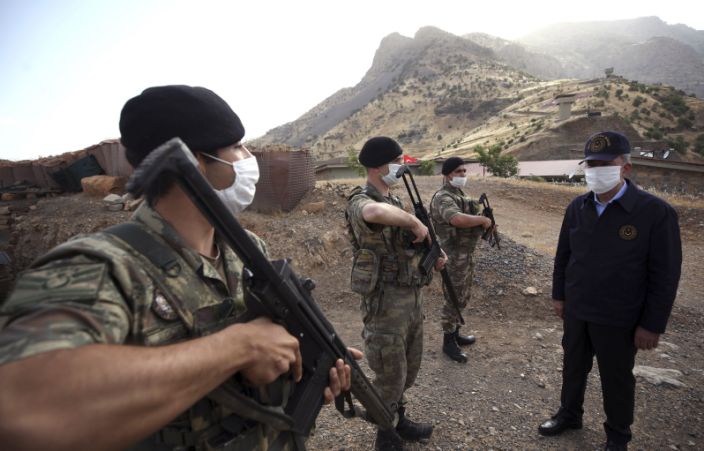
For Ankara, Syria’s peace is more than a regional issue — it’s an essential component of Turkey’s own domestic peace process.
A stable and unified Syria, in which Kurdish forces are integrated into the national framework, could open the door to renewed dialogue on Kurdish disarmament, border normalization, and refugee return.
Turkish President Recep Tayyip Erdoğan, who spoke recently with US President Donald Trump, emphasized that Syria’s reintegration “serves the interests of both Turkey and the broader region.”
Analysts say that if the Damascus–SDF talks succeed, Turkey could gain a new diplomatic platform to address its security concerns in northern Syria through dialogue rather than force.
The Regional Dimension: Peace or Fragmentation
The stakes extend beyond Syria’s borders. Failure to stabilize the country could destabilize Iraq’s north, empower radical groups, and reignite migration pressures on Turkey and Europe.
Conversely, a successful Syrian peace process — anchored by Kurdish-Damascus reconciliation and supported by Turkey and the US — could redefine the Middle East’s new balance of power following the Gaza conflict and Iran-Israel tensions.
Pedersen concluded bluntly: “Syria’s transition must not become another authoritarian experiment. If managed wisely, it can become the foundation for a new regional peace architecture.”