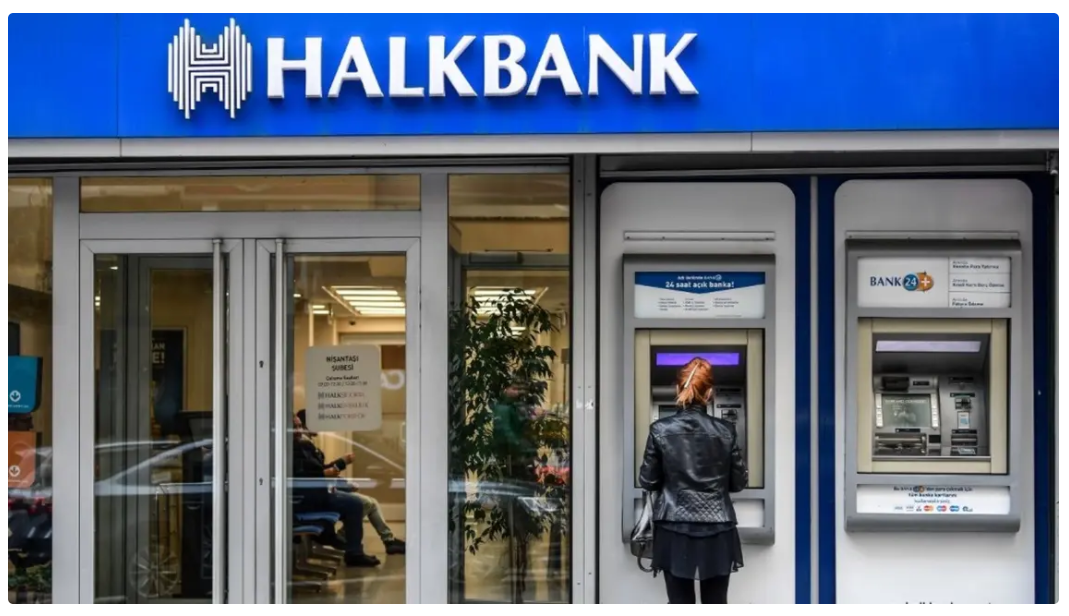
U.S. Supreme Court Rejects Halkbank’s Final Appeal in Iran Sanctions Case
 Halkbank
By refusing to hear the bank’s appeal, the Supreme Court effectively allows the criminal case to proceed in the lower courts. Unless a settlement is reached, the decision could pave the way for a high-profile trial involving one of Turkey’s largest financial institutions.
In a statement, Halkbank said it would continue to “assert all its legal rights” and that “initiatives to find a legal ground of conciliation within the framework of the understandings between the United States and Turkey are also ongoing in a positive direction.”
The Allegations: Gold, Cash, and Sanctions Evasion
According to U.S. prosecutors, Halkbank used a complex web of money servicers and front companies based in Iran, Turkey, and the United Arab Emirates to bypass sanctions imposed on Tehran. The scheme allegedly involved transferring over $20 billion in restricted Iranian funds, converting oil revenues into gold and cash, and falsifying food shipment records to disguise the transfers as humanitarian trade.
These actions, prosecutors argue, directly benefited Iranian government interests and undermined U.S. efforts to enforce sanctions targeting Iran’s energy sector.
Legal Debate Over Sovereign Immunity
At the core of Halkbank’s defense is the argument that, as a state-owned entity, it is immune from prosecution under the Foreign Sovereign Immunities Act (FSIA) and common law principles of sovereignty. However, in 2023, the Supreme Court rejected Halkbank’s FSIA claim, ruling that the Act did not automatically protect foreign state-owned companies from criminal proceedings in U.S. courts.
The Court remanded the case to the 2nd U.S. Circuit Court of Appeals to determine whether common law immunity might apply instead. The following year, the 2nd Circuit again ruled against Halkbank, finding that common law does not shield foreign state-owned entities engaged in commercial or nongovernmental activities from criminal prosecution.
Justice Department’s Position and Broader Implications
The U.S. Justice Department, under both the Trump and Biden administrations, has consistently opposed Halkbank’s immunity claims. In an August 6 brief, the Department stated that “common law principles do not shield foreign state-owned companies from criminal prosecution.” This stance underscores Washington’s broader approach to enforcing sanctions compliance—even when violations involve state-linked institutions.
Potential Trial Ahead
The Supreme Court’s latest refusal to intervene leaves no remaining appellate avenues for Halkbank. The case will now return to the lower courts, where prosecutors are expected to press forward toward trial. Analysts note that any eventual conviction could carry significant financial penalties and further strain U.S.-Turkey diplomatic ties, especially given Ankara’s efforts to maintain balanced relations with both Washington and Tehran.
Still, ongoing talks between the two nations suggest that a diplomatic settlement remains possible before the case reaches trial.
As Halkbank navigates the intersection of law, diplomacy, and geopolitics, its case stands as a defining example of how economic sanctions, state ownership, and judicial authority intersect in a globalized financial system.
Related articles
Turkey resists U.S. pressure to scrap Russian S-400s, explores limited-use compromise
Columnist Claims U.S. ‘Approved’ Dynasty for Türkiye, Citing Barrack’s Remarks

U.S. Supreme Court to Decide Whether to Hear Halkbank Immunity Appeal