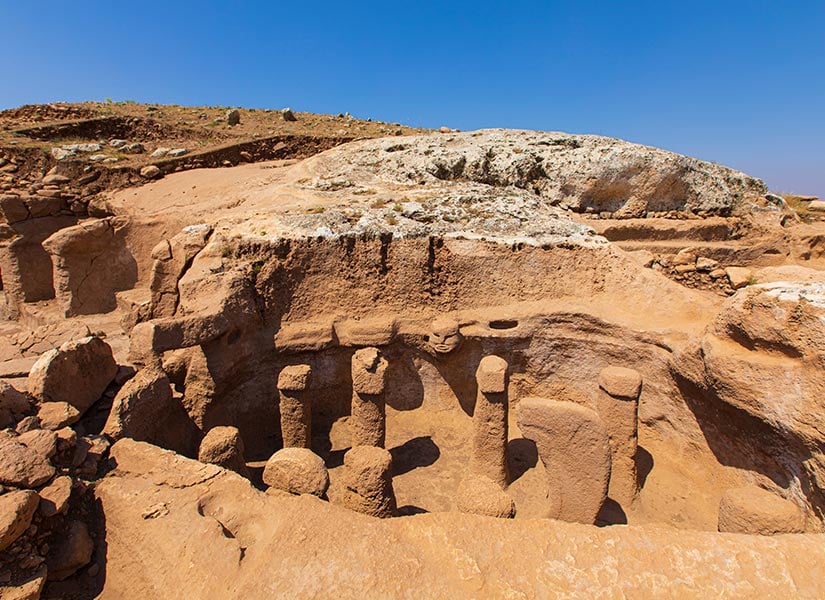
12,000-Year-Old Human Carving Unearthed at Karahantepe
 Karahantepe
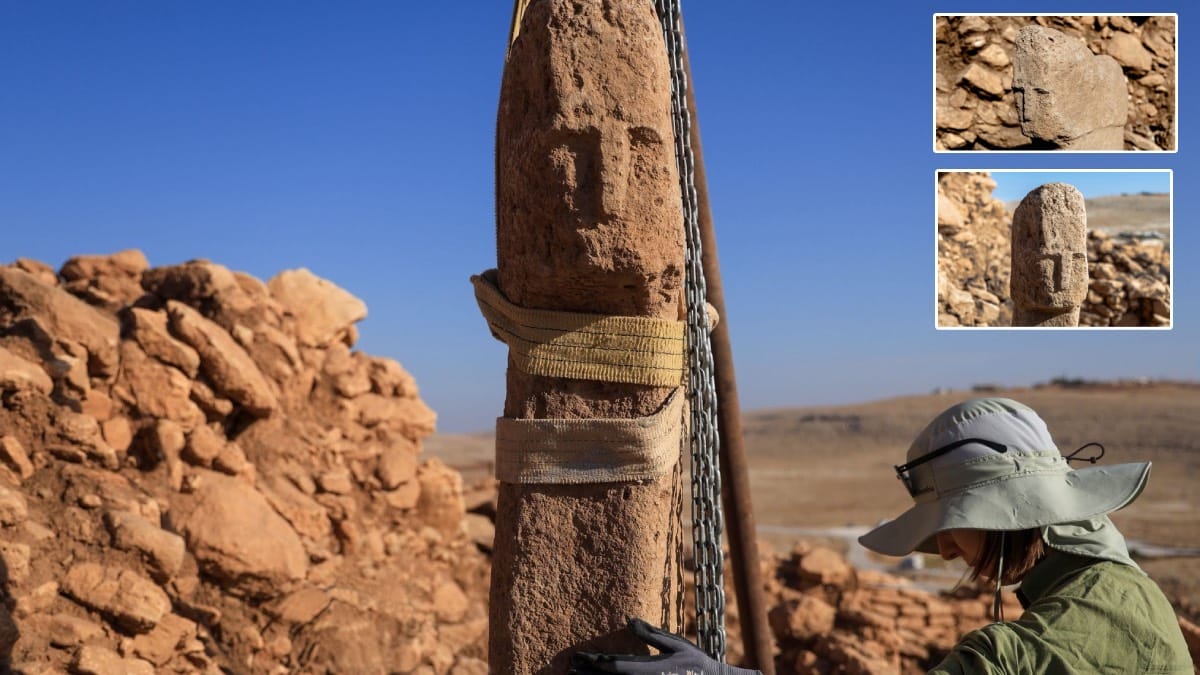
Under the leadership of Türkiye’s Ministry of Culture and Tourism, the 2025 excavation season of the Taş Tepeler Project continues across ten archaeological sites in Southeastern Anatolia. Among these, the Karahantepe excavation has yielded one of the most striking findings of recent years: a T-shaped pillar engraved with a human face—a discovery that could reshape our understanding of the Neolithic era.
A First in Neolithic Art: The Human Face on a T-Shaped Pillar
The newly unearthed monolith stands out as the first known T-shaped pillar to feature a direct human facial depiction. Previous findings in Göbeklitepe and surrounding sites revealed pillars with engraved arms and hands, leading archaeologists to interpret them as stylized human forms. Yet this Karahantepe pillar goes further—it includes distinct facial features, marking a new stage in prehistoric artistic expression.
Details of the Carving: Precision and Symbolism Combined
Archaeologists describe the sculpture’s sharp contours, deep eye sockets, and blunt nose as stylistically consistent with earlier Karahantepe statues. These characteristics indicate not only technical mastery but also a sophisticated symbolic and emotional language among Neolithic communities.
Researchers suggest that the carving’s precision reflects the mental and cultural evolution of early societies—showing how humans began to express individuality, identity, and abstract thought through art roughly 12,000 years ago.
Beyond Architecture: The Symbolic Language of the Pillars
For decades, experts have viewed the T-shaped pillars found in Taş Tepeler sites as more than structural elements—they were spiritual or symbolic representations. The newly discovered face reinforces this interpretation, suggesting these pillars served as anthropomorphic monuments that connected people to their beliefs, ancestors, or collective identities.
This finding adds a new dimension to the debate: the pillars may not have merely symbolized humanity but may have represented specific individuals or deities, directly capturing the human visage for the first time in Neolithic art.
Windows Into Early Civilization
The Taş Tepeler Project—named after the “stone hills” scattered across Şanlıurfa Province—encompasses several sites from Göbeklitepe to Karahantepe, all dating back to around 10,000 BCE. These sites are central to understanding humanity’s transition from hunter-gatherer societies to settled life.
Each new discovery contributes to a broader picture of early social organization, ritual practices, and the beginnings of artistic and symbolic communication. The Karahantepe face, in this context, bridges the gap between prehistoric architecture and expressive art.
Reconstructing the Mind of Early Humanity
Archaeologists emphasize that the presence of such detailed carvings indicates a complex cognitive world. The act of sculpting a human face on a monumental stone suggests self-awareness, social hierarchy, and perhaps early forms of storytelling or worship. These monuments were not merely decorative—they were statements of identity and belief, capturing a civilization at the dawn of organized thought.
A New Chapter in Human Artistic Expression
The Karahantepe discovery may redefine how we perceive Neolithic symbolism and aesthetics. It strengthens the notion that ancient Anatolia was not just the birthplace of agriculture and settlement but also one of human creativity and spirituality.
As excavations continue under the Taş Tepeler Project, archaeologists anticipate uncovering more evidence of the intellectual and cultural life that flourished in the region—proof that long before writing or cities, humanity already sought to carve meaning into stone.