Peace Commission Prepares “Advanced Democracy Report” as It Nears End of Hearings
 baris komisyonu
Summary:
Presidential adviser Mehmet Uçum confirmed that Parliament’s Commission on National Solidarity, Brotherhood and Democracy is nearing the end of its listening phase and hinted at a potential visit to İmralı Prison to hear from PKK leader Abdullah Öcalan. Uçum also revealed that once the “Transition to a Terror-Free Turkey” report is finalized, the commission will draft an “Advanced Democracy Report”, offering new legal and political recommendations for Turkey’s democratic roadmap.
Commission Nears Completion of Hearings
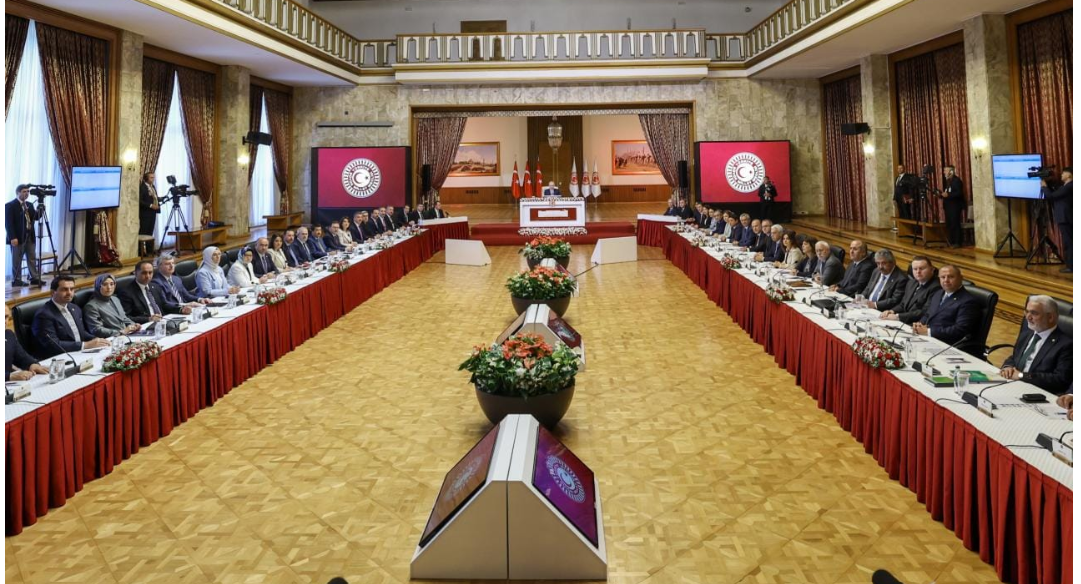
Presidential chief adviser Mehmet Uçum announced that the Parliamentary Commission on National Solidarity, Brotherhood and Democracy is wrapping up its listening activities, which he described as “highly valuable” for Turkey’s democratic practice.
Uçum said the commission, representing nearly the entire will of the Turkish Grand National Assembly, had “produced an extraordinary democratic experience” through its inclusive approach. He emphasized that the hearings — which involved civil groups, political actors, and experts — should not be underestimated, as they strengthened the foundations of participatory democracy in Turkey.
Green Light for Hearing Öcalan
The latest controversy surrounding the commission involves whether its members should travel to İmralı Island to hear from Abdullah Öcalan, the imprisoned leader of the PKK, or allow Öcalan to speak before Parliament.
Members of the DEM Party have repeatedly proposed that either the commission visit İmralı or Öcalan be brought to Ankara to speak.
In his latest article, Uçum gave a “green light” to the proposal, clarifying that such an event would constitute a listening session, not a negotiation.
“If the commission decides to hear Öcalan, it will do so only as part of its listening function. The commission has not exchanged views or negotiated with any of its guests — it simply listens,” Uçum wrote.
“Visiting İmralı Is Not Going to Öcalan’s Feet”
Uçum also challenged critics who claimed that sending a parliamentary delegation to İmralı would be a “humiliation” for Parliament.
“This argument is entirely wrong. Öcalan is held in a state-run penal institution. Parliament’s representatives have previously visited such facilities many times — this cannot be considered ‘going to anyone’s feet,’” he said.
He added that previous commissions have made numerous prison visits to meet with inmates and detainees, stressing that “useful democratic dialogue should not be blocked by symbolic objections.”
From “Terror-Free Turkey” to “Advanced Democracy”
Uçum further revealed that the commission’s next and final task will be to prepare a political and legal report titled the “Advanced Democracy Report.”
This follow-up will complement the commission’s earlier “Transition to a Terror-Free Turkey” findings and aim to set a long-term democratic roadmap for the country.
“In line with the democracy component of its name, the commission is expected to conclude its work by preparing a political and legal report reflecting an advanced democracy perspective,” Uçum said. “This document will likely serve as a key reference text and roadmap for Parliament during the current legislative term.”
Background and Political Context
The commission was established earlier this year as part of the government’s broader initiative to advance national unity and normalize Kurdish political dialogue after years of tension.
Its listening phase has included testimonies from civil society, political parties, and regional actors, with the aim of preparing a comprehensive framework for political reform and reconciliation.
If the commission indeed hears from Öcalan, it would mark the first time a parliamentary delegation has engaged with the imprisoned PKK leader since the collapse of the 2013–2015 peace process.