Experts Warn: Sındırgı Earthquakes Could Signal Bigger Threats
 earthquake
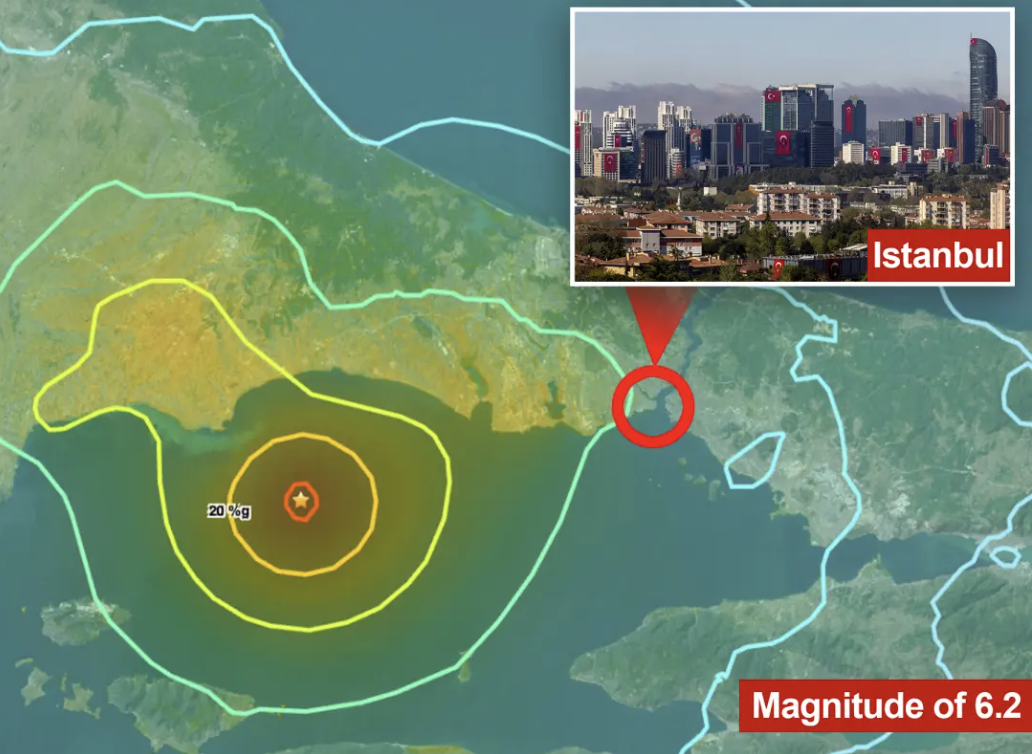
The recent earthquakes in Balıkesir’s Sındırgı district have ignited growing concern among seismologists, who warn that the region may not yet be out of danger. The 6.1-magnitude quake that struck the area has been described as more than a routine tremor—it may have triggered a geological chain reaction.
Two of Turkey’s most prominent earthquake experts, Prof. Dr. Ahmet Ercan and Prof. Dr. Osman Bektaş, offered detailed warnings, emphasizing both the structural risks to local housing and the geophysical processes still unfolding underground.
Ercan: “Risk of Quakes Above 6 Magnitude”
In earlier remarks, Prof. Dr. Ahmet Ercan cautioned that the region remains vulnerable to further seismic activity. He stated that earthquakes exceeding magnitude 6 are possible in the near future, especially given the weakness of many local structures.
Ercan urged authorities to accelerate the relocation of residents into TOKİ-built housing, which is considered more resistant to earthquakes:
“The homes in Sındırgı are largely fragile. Citizens should be directed toward stronger housing options, such as TOKİ residences,” he advised.
His call highlights not only the unpredictability of seismic hazards but also the role of urban planning and resilient construction in minimizing loss of life.
Bektaş: “The Fault Valve Has Opened”
Meanwhile, Prof. Dr. Osman Bektaş, a geologist and earthquake researcher, provided a different lens on the situation. In a social media statement, he described the recent quake as an event that effectively “opened the fault valve.”
Bektaş explained that beneath the earth’s surface, hot, pressurized fluids had long been trapped within the fault. The sudden rupture of the 6.1 quake allowed these fluids to escape, seeping into the fault line and altering its behavior.
How Stress Is Releasing Slowly
According to Bektaş, this release of pressurized fluids has set the stage for a sequence of aftershocks. The process eases built-up strain within the fault zone, allowing it to slide slowly rather than rupture all at once.
This “gradual stress release” can temporarily reduce the likelihood of a catastrophic quake on the same fault but may simultaneously redistribute stress to nearby faults, potentially loading them with new tension.
In his forecast, Bektaş suggested that eventually the “fault valve” will close again, at which point seismic activity in the region is expected to subside.
Lessons From Western Marmara
Bektaş drew parallels with the Western Marmara region, where creeping faults have been observed to release stress gradually rather than through devastating ruptures. He noted that the “open valve” condition seen in Sındırgı resembles this creeping behavior, suggesting that while destructive energy is being released, the process is far from complete.
What This Means for Residents
The scientific observations underline a broader reality: while seismic processes may be understood in theory, the exact timing and magnitude of future quakes remain unpredictable. For residents, the advice from experts converges on a common theme:
-
Strengthen housing and infrastructure.
-
Prepare for possible aftershocks.
-
Adopt long-term strategies for earthquake resilience.
Both Ercan and Bektaş stress that Turkey’s seismic geography requires more than reactive measures—it demands proactive adaptation to ensure safety in regions crisscrossed by active faults.
An Ongoing Test of Preparedness
For Sındırgı and its surrounding areas, the message is clear: the earth may still have more to release. Whether this comes in the form of moderate aftershocks or another strong quake will depend on how the fault system evolves in the coming weeks and months.
As scientists continue to monitor the situation, the recent events serve as a reminder that earthquakes are not isolated incidents but part of larger tectonic processes. The “open valve” may eventually close, but until then, vigilance remains the best defense.