



Canal Istanbul Report Warns: 25 Cultural Treasures Face Oblivion
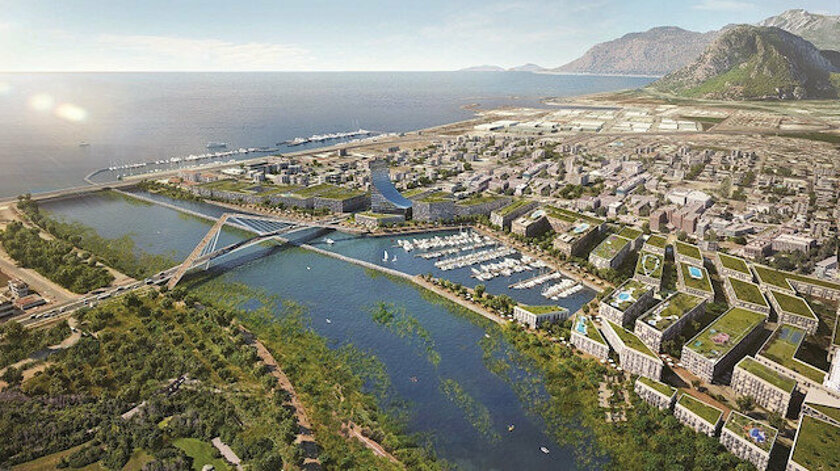 Kanal İstanbul
The controversial Canal Istanbul Project has once again stirred national debate—this time not over its financial cost or environmental impact, but the risk it poses to centuries of cultural heritage. A 400-page expert report prepared as part of the Environmental Impact Assessment (EIA) process reveals that at least 25 significant cultural assets—ranging from the prehistoric Yarımburgaz Cave to Ottoman industrial sites—could be gravely threatened.
The findings, presented to the Council of State’s 4th Chamber as part of an ongoing lawsuit, describe the EIA’s treatment of archaeology and cultural heritage as “incomplete and unreliable.”
The Scope of the Expert Panel
The report was compiled by a team of 21 experts, including 19 professors and one associate professor. Their collective assessment concluded that the EIA’s positive decision was scientifically and technically unfounded, particularly in areas concerning cultural preservation.
The panel emphasized that the evaluation was limited to officially registered sites, while the broader cultural landscape—spanning prehistory to the Republican era—was largely ignored.
Layers of History Along the Route
The canal’s proposed route is not just a modern engineering corridor. It cuts through a landscape enriched by thousands of years of history. The report lists:
-
Prehistoric caves and settlements
-
Roman water structures
-
Ottoman aqueducts and pump stations
-
Industrial relics such as the 19th-century Küçükçekmece Match Factory
-
Military fortifications and bunkers from the Ottoman and Republican periods
This diversity, experts argue, reflects a continuous thread of human presence from the earliest settlements to modern times. Yet the EIA report fails to present a comprehensive strategy for safeguarding this heritage.
Neglected Ottoman Industrial Heritage
Particular criticism was directed at the omission of Ottoman-era industrial landmarks. Despite their registration in the 1990s, sites such as the Küçükçekmece Kibrit (Match) Factory and the Terkos Pumping Station were left out of the official assessment. Similarly, archaeological remains in Lake Küçükçekmece and potential underwater heritage along the Black Sea coast were overlooked.
The report notes that no explanation was provided for how construction—especially excavation and blasting—would avoid damaging these assets.
Incomplete and Unsafe Documentation
The experts sharply criticized the lack of reliable field surveys and analysis. According to their statement:
“Archaeological and cultural heritage assessments lack fundamental analysis for condition determination, impact evaluation, and protection strategies. The existing desk-based or field studies are incomplete and unreliable; therefore, they cannot be scientifically assessed.”
The accompanying Archaeology Report also failed to mention the risks posed by excavation methods such as trenching and blasting. Of the 25 heritage assets identified, 11 were classified as facing “major transformation,” with the rest labeled “high transformation.” Yet these judgments were based only on surface area measurements, not detailed scientific evaluation.
Missing Maps, Missing Plans
One of the most striking omissions was the absence of a comprehensive map showing the location of the 119 bunkers and tanks reportedly situated along the route. Similarly, three first-degree archaeological sites—including Yarımburgaz Cave (a site of global significance), the Roman Aqueduct, and the Ottoman Terkos Waterway—are noted as endangered but without clear mitigation strategies.
The expert panel further concluded that the chosen route is the most destructive alignment for historical assets, a fact absent from the EIA’s official findings.
Weak Protection Proposals
Instead of presenting a detailed preservation strategy, the EIA report offers only vague commitments: cultural assets would be “monitored” and decisions would be left to the Regional Conservation Council. No specific measures were outlined for accidental discoveries during excavation—despite lessons from projects like the Yenikapı metro excavations, where unexpected archaeological finds reshaped historical understanding.
The lack of a scientific, proactive plan raises fears that priceless artifacts may be damaged beyond recovery once construction begins.
A Heritage at Risk of Being Erased
The report concludes that the Canal Istanbul Project, in its current form, poses severe risks to both archaeological and industrial heritage. With threats ranging from prehistoric sites to Ottoman infrastructure, experts warn that Turkey could lose irreplaceable links to its past in the pursuit of a new waterway.
The debate now extends beyond economics and ecology: it is about whether centuries of history will survive the bulldozers.