Turkey’s Pension Debate: Can Retirees Afford to Survive?
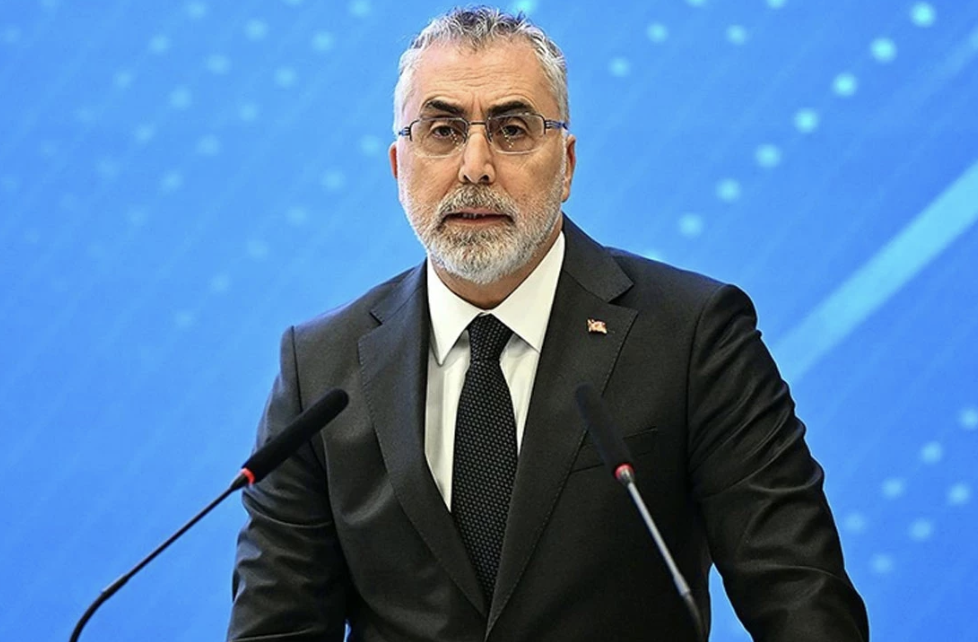 vedat ışıkhan
The pension system in Turkey has once again moved to the center of public debate, fueled by strikingly different statements from the government and the opposition. On one side, Minister of Labor and Social Security Vedat Işıkhan emphasized that pension payments continue despite financial strain. On the other, CHP Deputy Chair Yalçın Karatepe described the plight of retirees as a deepening social crisis shaped by political decisions.
The clash highlights a fundamental question: Can Turkey’s retirees survive in an economy where costs rise faster than income, and where social spending is increasingly debated as a burden on the budget?
Minister Işıkhan: “We Manage to Pay, Even Under Difficult Circumstances”
In a recent television appearance, Minister Vedat Işıkhan underscored the challenges of sustaining monthly payments to millions of retirees.
“Thank God, we are still paying the pensions, even under difficult conditions,” he said, noting that the social security system’s sustainability depends on new measures of fiscal discipline.
He pointed to examples from Europe, arguing that countries such as Germany and the United Kingdom have already moved toward austerity in welfare spending. According to Işıkhan, Turkey must follow a similar course:
“Where will you find savings? From social assistance, from retirees, and from minimum-wage earners—only then can you balance the budget.”
The Minister further highlighted the structural differences between systems. In Germany, for instance, retirement is granted only after longer contribution periods, while in Turkey, workers often qualify sooner but draw pensions over a much longer period. This, he argued, creates financial pressure on the state.
Opposition Critique: “Poverty Is a Political Choice”
CHP Deputy Chair Yalçın Karatepe responded with sharp criticism, calling the current situation a form of “social destruction.” Writing on social media, he claimed that the ruling party’s policies deliberately erode the welfare of retirees:
“Since 2016, the share of retirees in the population has risen from 14% to 18.5%. Yet their share of national income has fallen. This is the direct outcome of political preferences that spread poverty.”
Karatepe cited data from DİSK-AR and Eurostat, which reveal a steep decline in retirees’ share of Turkey’s wealth and a surge in elderly poverty:
-
In 2016, pensions accounted for around 7% of national income. By 2021, this share had dropped below 4%.
-
The number of citizens aged 65+ living at risk of poverty or social exclusion jumped from 1.08 million to 2.56 million over the same period.
For Karatepe, the statistics speak for themselves:
“Who you choose to spend public money on is a political decision. This poverty is the result of the AKP’s political choices.”
A Widening Gap Between Income and Living Costs
The debate touches on the daily reality of millions of retirees. With inflation eroding purchasing power, pensions that once provided stability now often fall short of covering basic needs such as food, rent, and healthcare. For many, survival increasingly depends on family support or continued part-time work well into old age.
Experts stress that Turkey’s rapidly aging population further complicates the issue. As more citizens qualify for retirement benefits, the system faces rising expenditures without a proportional increase in contributions. The result is a funding gap that fuels calls for reform—but reforms often mean cuts or stricter eligibility, creating fear among retirees.
European Comparisons and Local Realities
Işıkhan’s references to European models highlight a common policy dilemma: how to balance sustainability with fairness. In countries like Germany, longer working lives are offset by relatively higher benefit levels. In Turkey, however, pensions are typically lower, and many retirees lack supplementary savings.
This contrast raises concerns that applying austerity measures without structural wage and savings reforms may only deepen poverty.
The Human Face of Numbers
Beyond statistics, the human toll is evident. Official reports indicate that more than 2.6 million Turks over 65 live in poverty or risk social exclusion. Many struggle not just financially but also socially, as limited income restricts participation in community life, leading to isolation and vulnerability.
Karatepe framed this as more than an economic issue:
“This is not only about money. It is about dignity, social belonging, and the ability of our elderly citizens to live with security and respect.”
What Lies Ahead?
The debate over pensions is unlikely to fade. The government insists on fiscal prudence and the need for savings, while the opposition warns of a looming retirement crisis with severe social consequences.
Whether future policies will tilt toward austerity or social protection remains uncertain. But one fact is undeniable: millions of retirees are already caught in the middle of a political and economic tug-of-war, struggling to make ends meet in a rapidly shifting economic landscape.