Water Poverty by 2050? Experts Sound the Alarm for Turkey
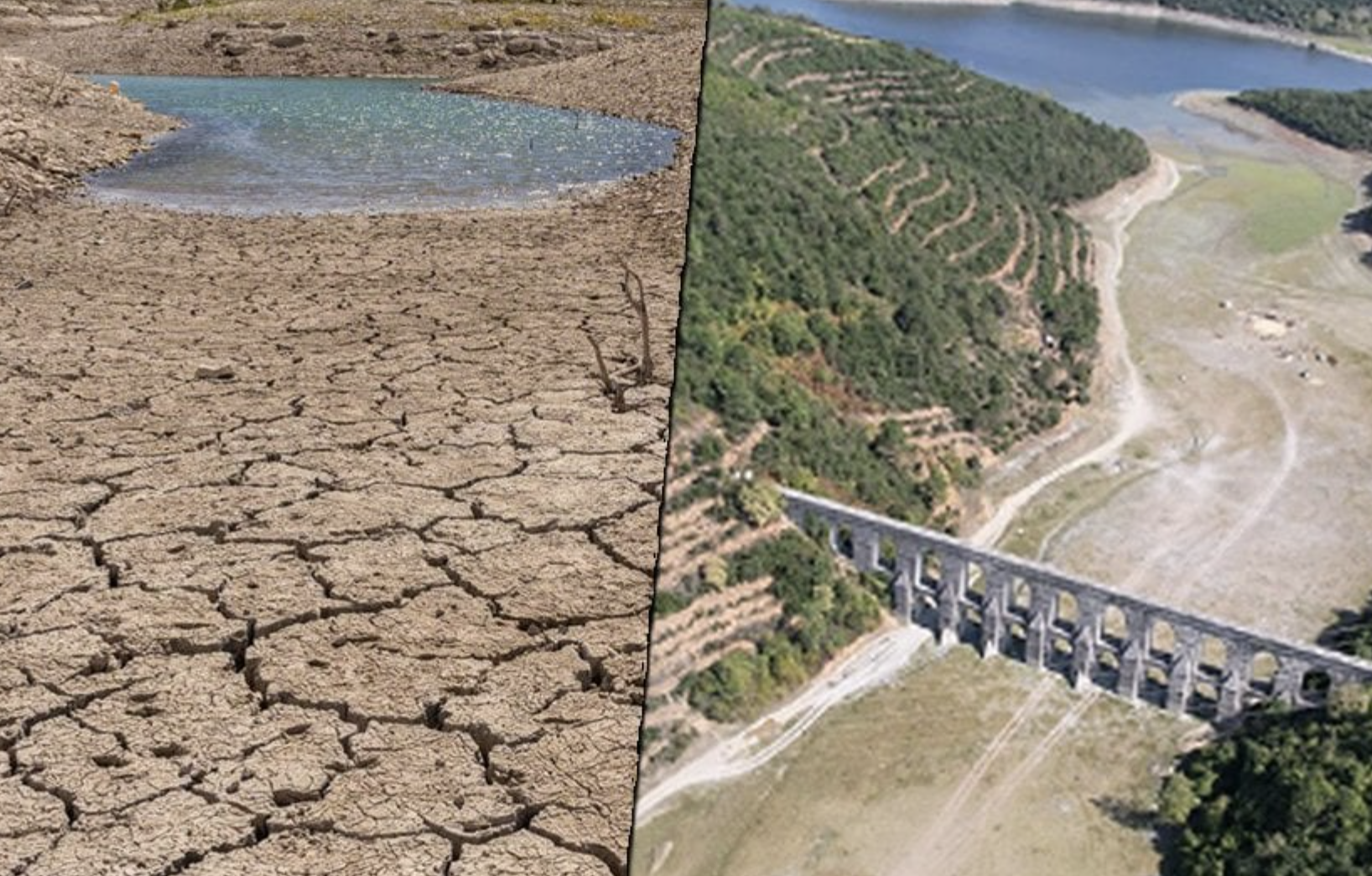
 Drought in Turkey
Turkey’s escalating drought crisis is threatening both agriculture and water security, with experts warning of an impending national disaster if urgent action is not taken. According to Prof. Dr. Mikdat Kadıoğlu of Istanbul Technical University (İTÜ), soil moisture levels in the Konya Plain have dropped to critical levels, leading to massive yield losses in wheat and corn.
“If no measures are taken, Turkey will become a water-poor country by 2050, and Central Anatolia will face desertification,” Kadıoğlu cautioned.
Meteorological Data Paints a Grim Picture
Figures from the Turkish State Meteorological Service (MGM) confirm the severity of the situation. As of August 2025, more than half of Turkey is classified as experiencing ‘very severe’ or ‘exceptional’ drought under the Standardized Precipitation Index (SPI).
Between March and August, the only region to escape extreme dryness was the Eastern Black Sea, where rainfall remained “normal” to “humid.” Everywhere else — from Central Anatolia to the Aegean and Mediterranean — rainfall deficiencies are directly crippling agricultural output.
More Than Weather: A Multi-Layered Crisis
Kadıoğlu stressed that drought is not simply a meteorological phenomenon. “It has agricultural, hydrological, and socio-economic dimensions. At the moment, Turkey is facing alarming conditions across all categories,” he explained.
Over the past 12 months, 70% of the country has been in the “severe drought or worse” bracket. Over a 24-month period, much of Western and Southern Turkey is ranked as suffering “exceptionally severe drought.”
Cities and Farms Under Threat
Major metropolitan areas and farming hubs are both at risk. According to Kadıoğlu’s analysis:
-
Istanbul is in “moderate to severe drought.”
-
Ankara and Konya are in “exceptional drought.”
-
Izmir and Antalya face “very severe drought.”
Reservoirs are running dangerously low. In Konya, reduced soil moisture has already caused crop failures, while in Adana and Diyarbakır, worsening conditions are driving farmers to migrate — turning climate stress into a social crisis.
Groundwater Vanishing, Prices Rising
The crisis is not confined to fields. Groundwater reserves are shrinking, wetlands are disappearing, and urban water supplies are under strain. Farmers are producing less food, pushing grocery prices higher nationwide. Energy cuts and water shortages are already being reported in several provinces.
In the Marmara and Aegean regions, drought conditions are escalating, with Izmir and Balıkesir now classified as experiencing “exceptionally severe drought.” In some areas, rainfall has declined by up to 74%.
Warning: “Water Poverty” by 2050
Kadıoğlu warned that if urgent structural reforms are not implemented, Turkey could officially become a water-poor country by 2050. “This is not just about drought but about water stress. In cities where population outstrips available resources, even if rainfall increases, shortages will continue,” he said.
From Crisis Management to Risk Management
The professor urged policymakers to adopt proactive risk management, rather than reacting to crises after the fact. He suggested Turkey’s cities should study global examples such as Cape Town’s “Day Zero” plan and Australia’s drought response strategies.
Recommended measures include:
-
Rainwater harvesting
-
Differentiating potable from non-potable water usage
-
Annual water budgeting
-
Agricultural insurance schemes
-
Local drought monitoring units
“Some cities are already beyond their water capacity. Without structural reforms, population pressure alone will guarantee shortages,” Kadıoğlu noted.
The Human Cost of Inaction
Beyond the technical data, the human toll is becoming harder to ignore. Farmers uprooting their lives, food becoming increasingly unaffordable, and entire regions sliding into aridification all point to a looming national crisis. Unless addressed, drought could become the defining challenge of Turkey’s mid-21st century, reshaping both its economy and society.
Related articles