Can Holding Operation: A Mirror to Turkey’s Black-Money Economy
 can holding
Seizures, opaque money flows, and media power: why the Sept. 11 raid looks less like a routine audit and more like an x-ray of a system.
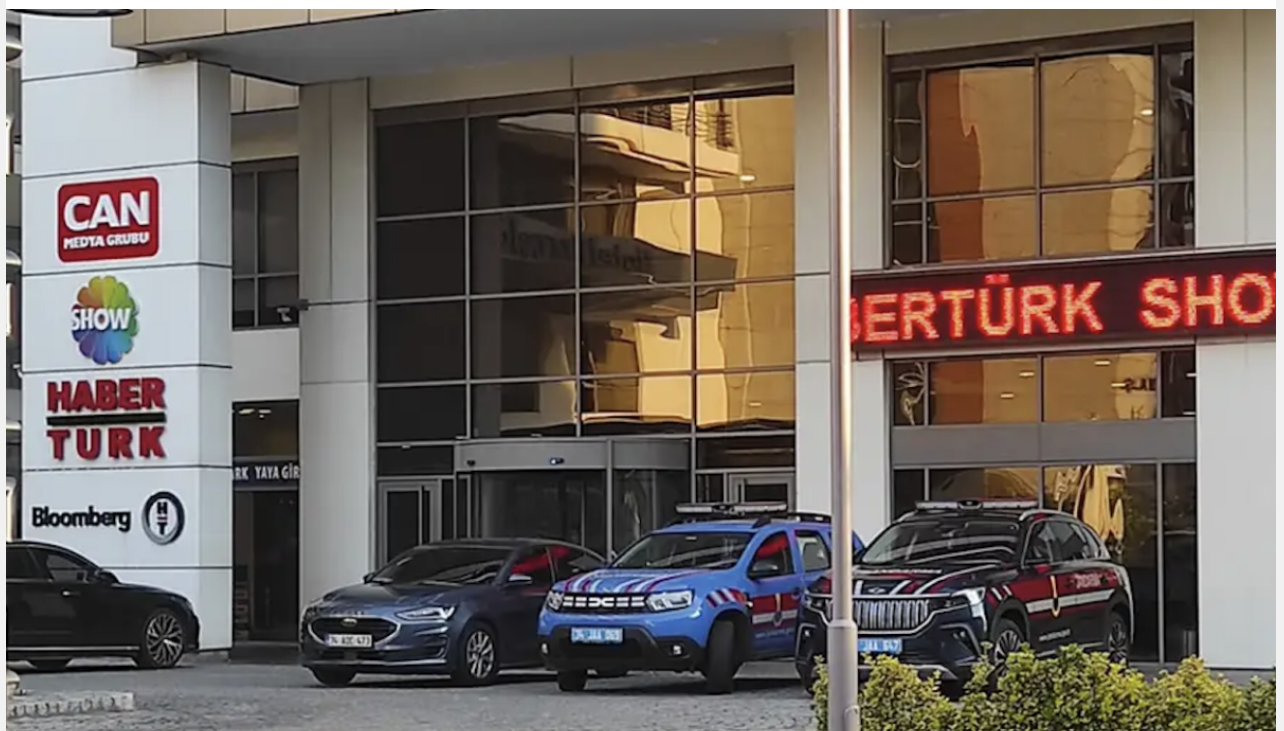
The Sept. 11 operation targeting Can Holding pulled back the curtain on Turkey’s shadow economy. Authorities seized 121 companies and cited an alleged TL 88 billion black-money trail, with the gendarmerie—not the police—front and center. What began decades ago with a border-shop in Doğubayazıt has, critics argue, morphed into one of Turkey’s largest conglomerates—an arc that says as much about the system as it does about one family.
From Smuggling to a Conglomerate: A System-Enabled Ascent
The Can family story starts at Gürbulak border gate with the Meteor free-shop. As far back as 2002, a raid reportedly netted 614 crates of illicit cigarettes—at a time when 70% tax rates made smuggling immensely profitable. The family’s parallel presence in Doğubayazıt and Kapıkule (Edirne) suggested scale and coordination. Even after a 2008 incident where a bonded-warehouse wall at Kapıkule was literally breached to steal cigarettes, the network appeared to land on its feet—fueling perceptions of institutional protection.
Religion as a Shield?
Allegations of links with the Eskişehir branch of the Menzil community point to a familiar laundering pathway: social legitimacy and political cover through religious networks. Whether proven or not, the pattern matters. In Turkey, organized crime and illicit finance often seek reputational camouflage in faith-based associations—granting access, protection, and silence.
Buying Spree, Silent Gatekeepers
Between 2019 and 2025, Can Holding went on an acquisition tear exceeding $1.2 billion:
-
2019: Istanbul Bilgi University – $90m
-
2022: Doğa Schools – price undisclosed ($60m debt assumed)
-
2024: Ciner Media Group (Habertürk, Show TV, Bloomberg HT) – $800m
-
2025: 40% of Tekfen Holding – $315m
These headline deals raise a basic question: source of funds. How did a group reportedly carrying a multibillion-lira tax debt at its Mersin cigarette plant finance such expansion? And where were sectoral gatekeepers—RTÜK (media), SPK (capital markets), BDDK (banking)—while these money flows coursed through the system?
Media Power, Political Insurance
The chronology is striking. Habertürk ran persistent coverage on Doğa Schools’ debts; later, Can Holding acquired both Doğa and Habertürk. Industry veteran Kenan Tekdağ remained a central executive figure first at Ciner Media, then at Can—an emblem of the media-capital-politics triangle. Journalist İsmail Saymaz has claimed the operation was “held for a week and launched after approval from the Palace.” If accurate, it begs the bigger question: who enabled Can’s growth while probes reportedly ran since 2020?
The Lale Cander Variable—and an Italy Angle
Lale Cander’s career—Pirelli Turkey CEO to Can Holding executive to chairing the Turkey–Italy Business Council—intersects with sensitive files: defense-industry diplomacy (e.g., Baykar–Leonardo), the aborted Formula-1 bid, and more. Ankara chatter that she “overused the Presidential complex’s name” speaks to how reputational currency is minted—and spent—in an opaque ecosystem.
Four Systemic Fault-Lines No One Should Ignore
-
Partners in the State: A TL 88bn flow cannot pass without enablers across customs, tax, and banking. Who looked away? Who facilitated?
-
TMSF’s Role: What happens to the seized companies under the Savings Deposit Insurance Fund? Past TMSF sales have redrawn ownership maps. Is this a redistribution exercise?
-
Why the Gendarmerie? Tasking the gendarmerie hints at a security framing—beyond a mere financial audit.
-
Asset Amnesty as a Laundering Valve: Prosecutors allege misuse of “Wealth Amnesty” rules. If true, legislative design itself became part of the laundering toolkit.
Scenarios: From Controlled Cleanup to Domino Risk
Scenario 1 – Controlled Unwind: TMSF parcels out assets to “clean” capital; media to loyal groups, schools to foundations. A few symbolic sentences; system intact.
Scenario 2 – Domino Effect: The probe deepens into politicians, bureaucrats, and other conglomerates. Confidence wobbles; FX jumps; capital flees.
Scenario 3 – Quiet Closure: Files close softly; seized firms return; small fines tidily resolve matters. Can Holding resumes, reputationally “laundered.”
Scenario 4 – Strategic Restructuring: The group is broken up; strategic assets (media, energy) migrate to state-aligned entities; education to foundations. A new capital bloc emerges.
The Questions That Define the Case
-
If probes date to 2020, why did decisive action come in 2024/25?
-
Who warned whom? Who moved assets in time? What funds were spirited offshore?
-
With ~30,000 employees, 500+ fuel stations, and education/media footprints, how did risk oversight miss (or tolerate) systemic exposure for so long?
Bigger Than One Holding
The Can affair is less an outlier than a prism. It refracts Turkey’s structural ailments: black-money intermediation, tax evasion, political patronage, religious cover, and media capture. Absent reforms that pierce these circuits, raids treat symptoms, not the disease.
At heart, Turkey’s problem is illicit finance embedded into economic arteries. Can Holding may be the visible tip; the submerged mass is a landscape of similar structures scaling via similar methods. The timeline is political as much as legal—coinciding with operations on CHP municipalities and other hot-button cases. Is this a one-off, a settling of scores, or the opening act of a broader reset?
Bottom line: In today’s system, the path from smuggling to the C-suite is not only imaginable—it can be rational, provided the right relationships click at the right time. The system worked for the Can family—until it no longer needed them. The real test isn’t “who’s next,” but when and how the underlying system changes.
Source: Opinion/analysis adapted from a Turkish text by Can Ilker (Economist/Strategist).
IMPORTANT DISCLOSURE: PA Turkey intends to inform Turkey watchers with diverse views and opinions. Articles in our website may not necessarily represent the view of our editorial board or count as endorsement.
Follow our English language YouTube videos @ REAL TURKEY: https://www.youtube.com/channel/UCKpFJB4GFiNkhmpVZQ_d9Rg
And content at Twitter: @AtillaEng
Facebook: Real Turkey Channel: https://www.facebook.com/realturkeychannel/