



İmamoğlu Emerges as Symbol of Turkey’s Democratic Resistance
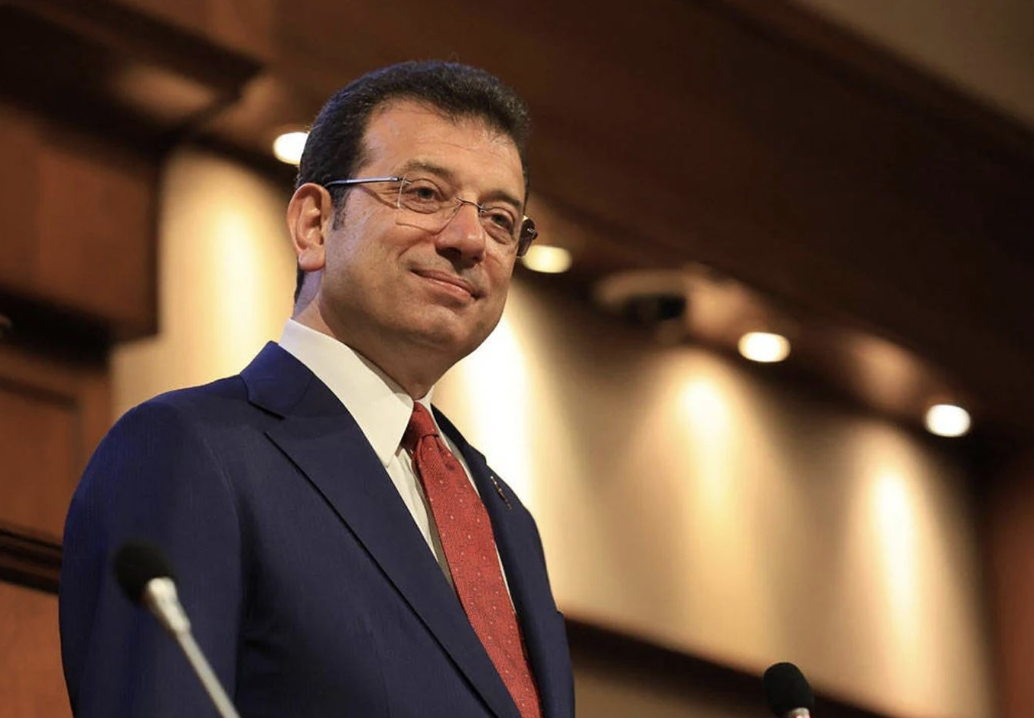 Ekrem İmamoğlu
Ekrem İmamoğlu, Istanbul’s jailed mayor and the main challenger to President Recep Tayyip Erdoğan in the 2028 Turkish elections, continues to shape political debate despite his imprisonment. Detained in March on what opposition leaders call fabricated charges, İmamoğlu has refused to stay silent, publishing an essay in The Economist outlining his vision for a more open, democratic Turkey that contributes constructively on the world stage.
Arrest Sparks National Unrest
İmamoğlu’s sudden arrest was described by his party, the Republican People’s Party (CHP), as nothing short of a “civilian coup”. He was accused of corruption and alleged terror links just days before he was expected to be declared the CHP’s candidate for the 2028 presidential race.
The move ignited widespread outrage across the country. From Istanbul’s bustling districts to the towns of Anatolia, mass protests broke out, lasting for weeks despite strict bans on public gatherings. Turkish authorities have since widened their crackdown, arresting dozens of additional opposition figures.
President Erdoğan accused the opposition of orchestrating unrest, but analysts compared the protests to the 2013 Gezi Park demonstrations, which started as a small movement and evolved into a nationwide uprising against government policies.
From Reformist Leader to “New Authoritarian”
Erdoğan once enjoyed a reputation as a reform-minded leader who could blend Islamic traditions with democratic governance, offering a potential model for the wider Muslim world. However, after more than 20 years in power—first as prime minister, then as president—he has consolidated control and placed nearly all state institutions under his influence.
This political system has given rise to a new term: “Erdoğanism”. Observers note that other countries with similar power centralization are undergoing “Erdoğanisation.”
Political scientists now classify Turkey as an example of “new authoritarianism.” Leaders in this category, such as Vladimir Putin in Russia and Viktor Orbán in Hungary, maintain the trappings of democracy—elections, opposition parties, parliaments—while curbing media freedom, judicial independence, and civil society to secure long-term dominance.
According to Freedom House, Turkey’s political rights score stands at 33 out of 100, placing it alongside states like Pakistan and Jordan. The report cites weaknesses in electoral integrity, governance, freedom of expression, and judicial fairness. Similarly, Amnesty International highlights:
-
State interference in judicial processes
-
Politically motivated prosecutions of journalists, activists, and opposition figures
-
Limits on freedom of assembly
-
Escalating violence against women
Despite this democratic backsliding, international leaders have largely avoided confronting Erdoğan. The European Union has issued only mild criticism, while the United States continues to engage Ankara as a strategic partner.
Erdoğan’s International Leverage
Western hesitation stems from Turkey’s geopolitical importance. The country has hosted millions of Syrian refugees and acted as a mediator in the Russia–Ukraine conflict, reinforcing its role as a key regional player.
Former U.S. President Donald Trump even praised Turkey as a “good place” and lauded Erdoğan’s leadership qualities. The EU, too, has prioritized security and migration cooperation over addressing Turkey’s democratic erosion.
A Rising Youth Movement
Despite Erdoğan’s dominance, Turkey’s youth is emerging as a powerful force for change. Having grown up knowing no other leader, many young voters are disillusioned with declining freedoms and economic struggles.
Opinion polls suggest that İmamoğlu, even from prison, remains one of the most popular figures capable of challenging Erdoğan in 2028. His university degree was controversially annulled, technically disqualifying him from candidacy, but his popularity has only grown since his arrest.
Images of İmamoğlu have been restricted in state-controlled media, yet his wife, Dilek İmamoğlu, has stepped into the spotlight as a vocal opposition figure, further fueling momentum.
Political commentator Ece Temelkuran argues that the creativity and determination of politically sidelined youth could ultimately overturn entrenched authoritarian structures. Demonstrations since İmamoğlu’s detention have been characterized by high Gen Z participation. In Antalya, a protester dressed as Pikachu famously fled police, symbolizing both humor and resistance.
A youth delegate even raised İmamoğlu’s imprisonment at the Council of Europe, only to face arrest upon returning to Ankara—an incident that underscored both the risks and resilience of Turkey’s new generation.
İmamoğlu’s Political Style
Part of İmamoğlu’s appeal lies in his approachability and optimism. His 2019 mayoral campaign in Istanbul centered on the concept of “radical love”, a strategy that resonated in a political landscape often dominated by polarization and nationalist rhetoric.
Unlike Erdoğan’s combative style, İmamoğlu projects affability. Reports suggest that when detained, he joked with police about their working conditions, telling them they might find better treatment working under his municipality.
Such gestures have strengthened his reputation as a pragmatic and empathetic leader, qualities that may prove crucial if Turkey’s opposition can mount a credible challenge in 2028.
Democracy’s Future in Turkey
While Erdoğan has consolidated power through media control, judicial influence, and political repression, the opposition—fueled by İmamoğlu’s resilience and the determination of a younger electorate—continues to push back.
Even with İmamoğlu behind bars, his popularity demonstrates that Turkey’s democratic spirit is not extinguished. Whether the momentum of youth activism and public resistance can ultimately reshape Turkey’s political future remains uncertain, but the struggle for freedom and representation is far from over.