DEM Party Sparks Debate: Constitutional Demands and İmamoğlu Rebuke Amidst Shifting Political Sands
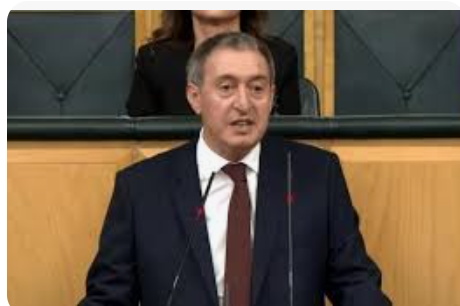 tuncer bakirhan
DEM Party Co-Chair Tuncer Bakırhan’s statements to T24 news site, underscores the complex and evolving political landscape in Turkey. Bakırhan’s statements reveal the DEM Party’s “third way” strategy, their stringent conditions for a new constitution, and a direct critique of Istanbul Mayor Ekrem İmamoğlu’s stance on recent political dialogues.
DEM Party’s “Third Way”: A Stance of Independence
DEM Party Co-Chair Tuncer Bakırhan firmly asserted the party’s commitment to a “third way,” emphasizing their independence from any established political bloc. “We have been pursuing the ‘third way’ for 15-20 years,” Bakırhan stated. “We have never taken sides with one bloc or one of the two political parties. We have tried to explain and organize our own path.”
Bakırhan acknowledged that the DEM Party has, at times, engaged in electoral collaborations, citing the “Urban Consensus” in local elections and their support for Kemal Kılıçdaroğlu in the presidential election. However, he stressed these were strategic tactical decisions aimed at achieving electoral success. “Sometimes society brings us together, societal priorities pull politics in certain directions. But apart from these, we have also pursued an independent policy unique to our identity,” he added.
New Constitution Debates: A Test for Kurdish Issue Resolution
One of the most contentious points raised by Bakırhan concerns the ongoing discussions about a new constitution. He laid down clear conditions for DEM Party’s potential support, focusing heavily on the unresolved Kurdish issue.
“This constitution will eventually come before us,” Bakırhan emphasized. “If there is no solution to the Kurdish issue, no democratization, no justice in the economy, who would say yes to it? Some are re-heating this topic and putting it on the public agenda. Instead of doing this, they should openly say, ‘I am against this process where the solution to the Kurdish issue is discussed.’ I would respect that.”
He highlighted that Turkey’s century-old problems, particularly the Kurdish issue, remain inadequately addressed, leading to “political and social decay, and economic problems.” Bakırhan underscored the significance of the ongoing process (often interpreted as a dialogue on a potential resolution of the Kurdish issue), but lamented its shallow public discourse. “Unfortunately, very few political minds interpret this positively. They evaluate it as a process that will meet the future expectations of an individual or a party, with very simple, superficial discussions. These do not define us, nor do they define our process,” he asserted.
Rebuke to İmamoğlu: A Misinterpretation of Political Events
Bakırhan directly challenged Istanbul Mayor Ekrem İmamoğlu’s recent call to “separate yourselves from the mindset that sees this process as an opportunity for their political future and political interests.” Bakırhan described İmamoğlu’s stance as “misinterpreting and evaluating political events.”
He elaborated on the DEM Party’s history of opposition to the ruling power: “We did not elect the government. On the contrary, we worked hard for the government to lose. We did not support Mr. Erdoğan, who is the current President. Our base openly voted for his opponent, and declared it. To say that a political party that so openly states its position on every platform has secret agendas or operates behind closed doors is openly distorting the truth.”
Bakırhan stressed that the Kurdish issue transcends elections and party interests. “This issue is far, far more valuable than individuals and parties,” he stated.
Government’s Intentions and DEM Party’s Principles
When questioned about the sincerity of the ruling party’s approach to the ongoing dialogue, Bakırhan adopted a cautious yet principled stance. “We are not a party that can be forced or dragged somewhere. That’s why we speak with this self-confidence,” he said. “We are not a tradition that tries to get Kurdish votes on one hand, and then signs a protocol denying Kurds on the other. We embrace our truths in prison, on the gallows; in every area we struggle. Why would we do anything secretly?”
He added, “What does the current ruling power, sitting at the table, think? We cannot know this. Are they expecting something from this, are they trying to pull us somewhere? We cannot read their intentions, and we cannot move forward by reading their intentions. Politics is not done by reading intentions. Our intention is clear: the Kurdish issue should be resolved through democratic means. Let’s achieve democratization in Turkey together. This is our primary goal.”
Bakırhan emphasized the dire need for a democratic judiciary and rule of law in Turkey, where “people are uneasy, not knowing when or where something will happen to them.”
Constitutional Vision: Beyond Party Interests
Bakırhan further elaborated on the DEM Party’s vision for a new constitution. “We define the constitution as a societal contract. Is a constitution something that one party imposes and other parties or society accepts?” he questioned. “If one party prepares a social contract that will determine the country’s next decades for its own benefit and future, will others comply, or are they obliged to comply? Therefore, this discussion is brought forth by those who oppose the process.”
He stressed that their party’s current agenda doesn’t prioritize a new constitution amidst pressing issues like justice, freedom, and economic inequality. However, he made it clear: “I would also like to tell the Turkish public this; this constitution will eventually come before us. If there is no solution to the Kurdish issue, no democratization, no women’s rights, no hope for the future of young people, no equal citizenship rights for Alevis, no justice in the economy, if ecocide continues, who would say yes to it? Would the DEM Party say ‘yes’ to that? Some are re-heating this topic and putting it on the public agenda. Instead of doing this, they should openly say, ‘I am against this process where the solution to the Kurdish issue is discussed.’ I would respect that.”
No Integration, Just Shared Goals: A Call for Broader Engagement
Bakırhan strongly refuted claims that the DEM Party is seeking to integrate with or be appended to other political factions. “Who is suggesting that we will be appended to someone else? Do we not have the capacity to govern this country?” he challenged, listing prominent figures like Selahattin Demirtaş and Figen Yüksekdağ. “Are we managing Diyarbakır Metropolitan Municipality worse than Ankara Metropolitan Municipality?” he asked, highlighting their 25 years of local governance experience and transparent, corruption-free approach.
He called for a focus on the democratic resolution of the Kurdish issue and the laying down of arms, asserting that this process is vital for all of Turkey, not just the Kurdish population.
CHP’s Hesitation and the Call for Dialogue
Addressing Ekrem İmamoğlu’s recent statements from prison, which included messages directed at both DEM Party and MHP, Bakırhan expressed understanding for CHP’s cautious approach. “I respect the Republican People’s Party’s hesitant approach to this issue due to the pressures they have experienced recently,” he said. “Of course, it’s normal for them to ask: ‘Will peace come this way while operations continue, and mayors are being arrested?'”
However, Bakırhan emphasized the need for common ground: “As long as each of us struggles in our own neighborhoods, our own circles, we face such negativities. If we can say ‘common democratic judiciary, law, justice, freedom, a democratic country, a democratic republic’ on a common ground, believe me, we would not experience any of what we are experiencing now.” He stressed that concerns diminish with shared gains and urged the CHP to actively participate in the process, viewing the resolution of the Kurdish issue and Turkey’s democratization as greater than any single political party’s interests.
“The table is like a political mat. Whoever avoids the mat loses. If we want to win peace, we need to be on the mat,” he stated, urging CHP to embrace its historical responsibility to tackle the Kurdish issue as a cornerstone of Turkey’s democratization.
Justice for Political Prisoners and İmralı Visit
Bakırhan condemned the continued detention of figures like Selahattin Demirtaş and Figen Yüksekdağ, calling their imprisonment “a crime every second.” He highlighted that despite European Court of Human Rights (ECtHR) rulings, these individuals remain incarcerated, undermining the rule of law. He noted that they recently met with Demirtaş and Yüksekdağ, who expressed strong morale and hope for the process, eager to contribute.
Crucially, Bakırhan announced that DEM Party co-chairs and MYK members would visit İmralı within “a week to 10 days” to receive Abdullah Öcalan’s suggestions and criticisms, and to discuss the ongoing process.
Parliamentary Commission and Judicial Reform
Regarding expectations for a parliamentary commission and the 11th Judicial Package, Bakırhan stressed the need for a truly substantive commission that addresses legal reforms beyond superficial adjustments. He called for comprehensive regulations to replace the patchwork of current laws, aiming for a Turkey where “bleeding wounds” are healed, not just bandaged. He also criticized the “White Toros” photo on a prosecutor’s desk, stating it symbolizes a desire for extrajudicial killings and highlights the need to eliminate such “White Toros” mentalities through sincerity and determined action in the justice system.
Tuncer Bakırhan’s remarks outline a DEM Party poised to play a central, independent role in Turkey’s evolving political landscape, setting clear terms for engagement and challenging established narratives, particularly on the path to a new constitution and the resolution of the Kurdish issue.