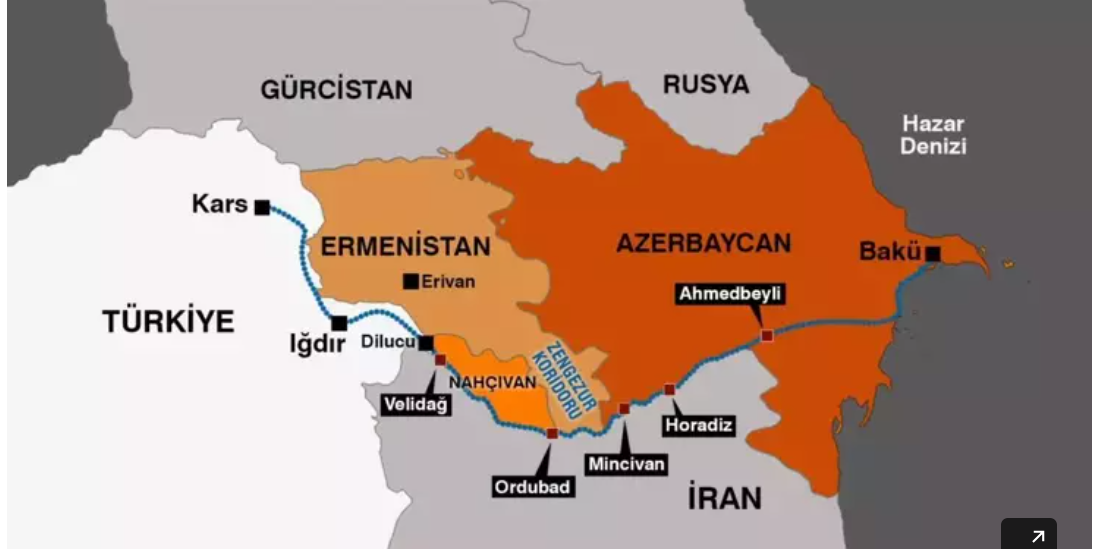
U.S. Offers to Lease Zangezur Corridor for 100 Years—But Can It Break the Deadlock?
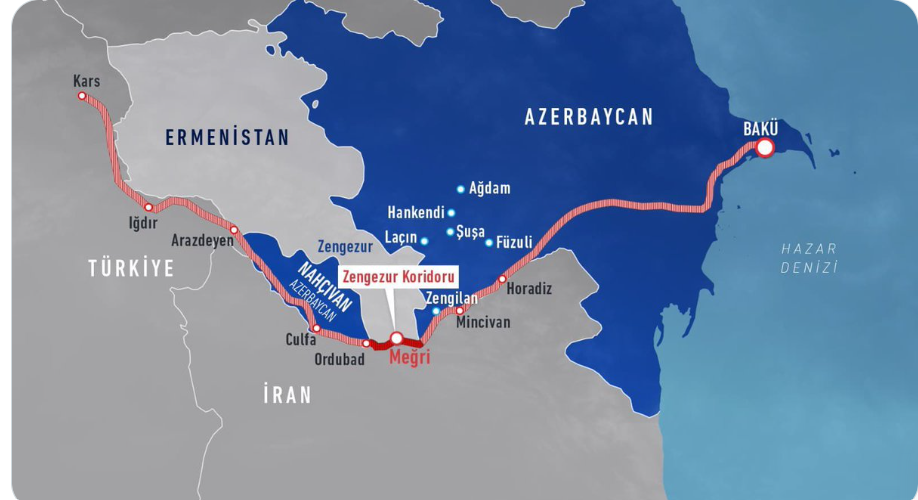 zengezur koridoru
A bold American proposal to manage the Zangezur Corridor between Armenia and Azerbaijan has reignited debate over sovereignty, regional transit, and geopolitical power plays—but deep-rooted mistrust may doom the initiative before it begins.
A Surprising Offer from Washington
U.S. Ambassador to Türkiye Tom Barrack has stirred regional tensions with a surprising offer: the United States is prepared to lease and administer the contentious Zangezur Corridor for 100 years. The move, intended to resolve the decade-long deadlock between Armenia and Azerbaijan over a 32-kilometer stretch of land, has been received with a mix of interest, skepticism, and outright rejection.
“They’ve been arguing over 32 kilometers of road for ten years. Then America steps in and says: ‘We’ll take it. Lease it to us for 100 years,’” Barrack said in comments quoted by Middle East Eye. He added that the administration of the corridor could be guaranteed by a private U.S. company.
Türkiye’s Role Behind the Scenes
According to unnamed sources, the idea to outsource corridor administration to a neutral party originated not in Washington, but in Ankara. Türkiye reportedly floated the concept to the Americans as a creative solution to end the gridlock. Both Baku and Yerevan are said to be aware of the plan, though with significant caveats.
Initially, the proposal would have allowed U.S. involvement only on the Armenian side. However, Yerevan reportedly demanded that the same arrangement apply to the Azerbaijani segment passing through Nakhchivan. This suggestion was immediately rejected by Azerbaijan, which views any foreign control over its transport infrastructure as unacceptable—regardless of whether the outsider is Russia or the United States.
Azerbaijan Draws a Red Line
For Baku, sovereignty over the Zangezur Corridor is non-negotiable. Despite shifting geopolitical realities—particularly the decline of Russian influence in the South Caucasus—Azerbaijan remains firm in its opposition to internationalizing the corridor’s management.
While the 2020 trilateral agreement between Russia, Armenia, and Azerbaijan assigned corridor security to Russian forces, Moscow’s diminished regional clout has opened the door for new actors. Yet Azerbaijan shows no sign of entertaining U.S. involvement, especially if it implies ceding even symbolic control.
Armenia Looks for Leverage
In contrast, Armenia has a long history of placing strategic infrastructure under foreign control. Its railways, energy grid, and industrial sectors have been dominated by Russian entities for most of its post-Soviet history. Today, Armenia is actively working to renationalize some of those assets—including a key energy company owned by Russian-Armenian tycoon Samvel Karapetyan, who was recently arrested over an alleged coup plot.
Prime Minister Nikol Pashinyan has been promoting the “Crossroads of Peace” initiative, a broader vision to reconnect Armenia with Iran through the reopened Meghri route—formerly known as the Zangezur or Meghri Corridor. However, this vision includes strong Armenian oversight, with Yerevan insisting that all transit routes on its territory remain under Armenian legal control.
U.S. Plan Faces Local Resistance
The U.S. proposal, while bold, now appears to be faltering. Initial optimism has given way to confusion and frustration—especially in Washington. Sources suggest that U.S. officials are dismayed by Armenia’s insistence on equal treatment for both sides of the corridor, a condition that Azerbaijan refuses to entertain.
Critics also point out that Washington appears unaware of the corridor’s recent historical origins. The Zangezur Corridor emerged as a bargaining chip only after Azerbaijan’s military victory in the 2020 war. Prior to that, it was not even on the negotiation table. Now, any attempt by the U.S. to act as a regional “savior” risks backfiring if it continues to misunderstand or underestimate the local dynamics.
First China–Turkey Freight Trains Depart as Ankara Pushes to Lead Eurasian Trade Corridors
A Realistic Proposal—or Just Theater?
At its core, Türkiye’s initiative—now championed by the U.S.—may be more symbolic than strategic. While it reflects Ankara’s desire to open a critical trade and transit route to Nakhchivan and beyond, the idea of a 100-year lease to a foreign power strikes many observers as deeply unrealistic.
For Baku, the corridor is a matter of national pride and post-war gains. Yielding even symbolic control to an American company, let alone a foreign government, would be politically unpalatable. Meanwhile, Yerevan’s attempt to frame the issue as a matter of legal symmetry is unlikely to shift Azerbaijan’s hardened stance.
Conclusion: A Long Road Ahead
The U.S. offer to lease the Zangezur Corridor may be ambitious, but its prospects are dim. While Armenia appears open to foreign guarantees, and Türkiye is eager for a breakthrough, Azerbaijan remains steadfast. Unless a compromise that respects Baku’s sovereignty can be found, the corridor may remain closed—and the region stuck in diplomatic limbo.
IMPORTANT DISCLOSURE: PA Turkey intends to inform Turkey watchers with diverse views and opinions. Articles in our website may not necessarily represent the view of our editorial board or count as endorsement.
Follow our English language YouTube videos @ REAL TURKEY: https://www.youtube.com/channel/UCKpFJB4GFiNkhmpVZQ_d9Rg
And content at Twitter: @AtillaEng
Facebook: Real Turkey Channel: https://www.facebook.com/realturkeychannel/
Related articles
George Friedman: Turkey’s Moment on the Global Stage
U.S. Warns Israel Over Syria Strikes Amid Fears of Derailing Emerging Security Pact

US Envoy Barrack Says Washington–Ankara Disputes Could Be Resolved Within Months