Esfender Korkmaz: No FDI Flow To Turkey Under This Regime
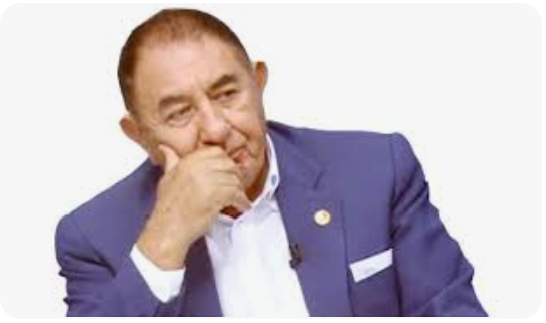 esfender korkmaz
Following the arrests of CHP mayors, foreign investment is exiting Turkey at an accelerating pace. Economist and Yenicag Daily columnist, former CHP MP, Esfender Korkmaz argues that the current political system is fundamentally incompatible with long-term capital inflows.
Turkish economist Prof. Dr. Esfender Korkmaz warns that under the current political regime, Turkey has effectively shut its doors to foreign direct investment (FDI). In a sharp critique, Korkmaz says Turkey never adopted a coherent investment policy, instead relying heavily on short-term speculative capital—a strategy that ultimately heightened financial fragility and discouraged productive capital inflows.
China Attracts FDI with Strategy—Turkey With Desperation
According to Korkmaz, globalization is primarily the globalization of capital—not labor. In that context, countries that operate under a free-market and open exchange system must play by the rules of the global investment game. “The game,” he writes, “is to attract direct investment while limiting hot money inflows.”
He cites China as a model that pursued quality over quantity: carefully controlling short-term capital inflows while creating strong incentives and structural trust for long-term investment. Turkey, by contrast, took an ad-hoc, opportunistic approach—welcoming any kind of capital, no matter how short-term or destabilizing.
FDI that did enter the country in recent years was largely channeled into real estate—especially under citizenship-for-investment programs—or into the acquisition of profitable Turkish companies and banks. “Very little went into greenfield projects,” he says, “so there was no job creation, no technology transfer, and no value-added production—unlike in China.”
Presidential System Marked the Turning Point
According to Korkmaz, the dramatic decline in foreign investment coincided with Turkey’s transition to an executive presidential system in 2018. Portfolio investment also began to exit rapidly, contributing to major currency shocks in 2018, 2021, and 2023. Since 2017, Turkey has seen a consistent decline in net FDI inflows, with outflows now exceeding inflows.
Although there was a brief uptick in portfolio inflows during 2023 and early 2024, that trend has reversed. Net capital outflows are now dominant.
March 2025 Arrests Deepen the Capital Exodus
The real shift, says Korkmaz, began after March 19, 2025, when CHP leader Ekrem İmamoğlu and several opposition mayors were arrested. “That moment marked the beginning of a net foreign capital exodus,” he says.
Despite being mid-July, the Central Bank has only released balance of payments data up to April 2025. That data reveals:
-
$268 million in net FDI outflows in April alone
-
$10.9 billion in portfolio investment outflows
Korkmaz believes this trend will only accelerate, warning: “From now on, Turkey will not see net inflows of foreign investment. Period.”
International Condemnation Fuels Investor Flight
Korkmaz notes that direct investors take cues from international institutions and legal norms, particularly those of the European Union. The arrests of opposition mayors triggered a wave of condemnation from global actors:
-
The Council of Europe called the arrests “a violent blow to the will of the people.”
-
European Parliament rapporteur Nacho Sánchez Amor described it as “full throttle authoritarianism.”
-
German Chancellor Olaf Scholz said the detentions were “absolutely unacceptable.”
-
Amnesty International labeled the crackdown “draconian.”
-
Human Rights Watch called the arrests “politically motivated repression.”
Foreign Investment: The Best Cure for the Current Account Deficit
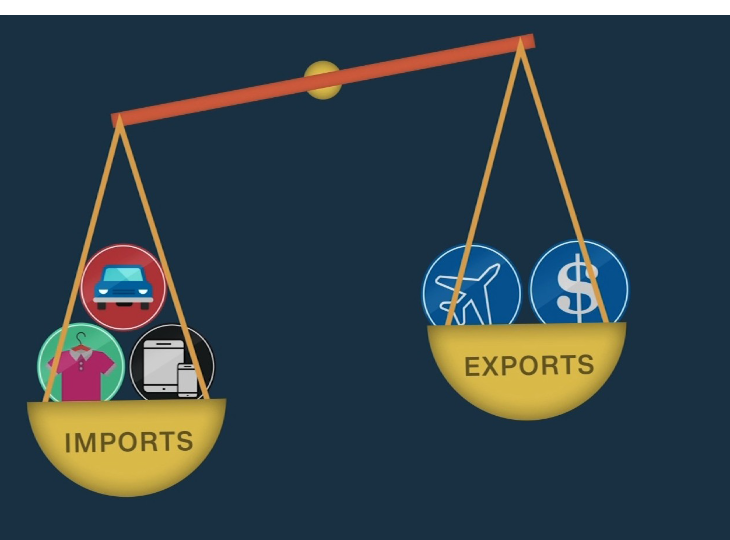
Korkmaz emphasizes that foreign direct investment is the healthiest form of financing for Turkey’s current account deficit. Without it, Turkey must rely on external debt, increasing its vulnerability to financial shocks.
“Throughout the Republic’s history, our most pressing issue has always been the foreign exchange shortage,” he warns. “If we continue to ignore how political steps affect capital flows, we risk facing a currency crisis and debt moratorium far worse than anything we’ve experienced so far.”
IMPORTANT DISCLOSURE: PA Turkey intends to inform Turkey watchers with diverse views and opinions. Articles in our website may not necessarily represent the view of our editorial board or count as endorsement.
Follow our English language YouTube videos @ REAL TURKEY: https://www.youtube.com/channel/UCKpFJB4GFiNkhmpVZQ_d9Rg
Twitter: @AtillaEng
Facebook: Real Turkey Channel: https://www.facebook.com/realturkeychannel/