Professor Warns: A 47% Chance of Major Earthquake in İstanbul
 earthquake
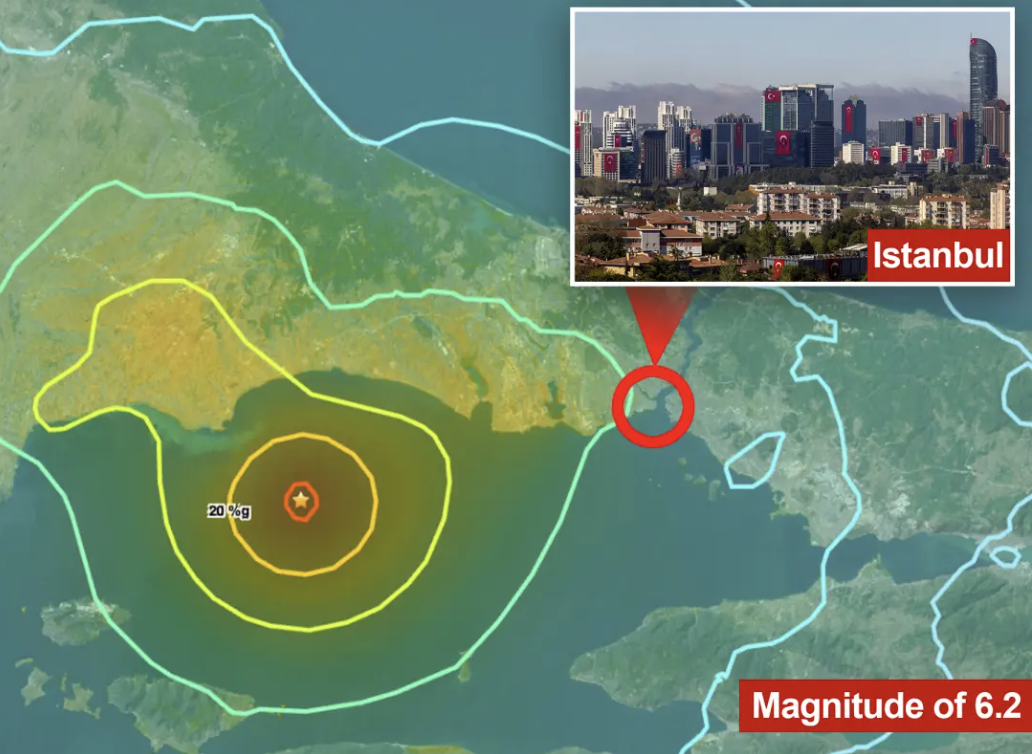
In the wake of increasing speculation surrounding the Marmara earthquake risk, renowned Turkish geophysicist Prof. Dr. Şerif Barış is calling for measured awareness rather than panic or denial. According to Barış, public claims such as “the disaster is imminent” or “the risk is over” are scientifically baseless, warning instead that Istanbul faces a 47% chance of experiencing a magnitude 7.3 earthquake within the next 30 years.
Risk Remains High: Not Imminent, But Not Over
Following the February 6, 2023 Kahramanmaraş earthquakes, eyes have turned once again to Marmara’s fault lines. Barış criticizes contradictory statements circulating in the media that either fuel panic or encourage dangerous complacency. “The science doesn’t support either extreme,” he said.
“There’s significant stress build-up on the fault segment stretching from Büyükçekmece to the Bosphorus, and it holds the potential to trigger a quake between 6.5 and 7.3 in magnitude,” Barış explained.
He referenced historical and instrumental records that indicate major quakes every 250–500 years in the Istanbul region.
Probability: 47% for a 7.3 Magnitude Quake by 2055
According to a 2016 study, there’s a 47% probability of a devastating earthquake striking offshore Istanbul within the next 30 years. Barış argues this projection likely needs updating after recent seismic activity.
“Earthquake risk cannot be measured precisely, but it can be estimated. What we do know: the risk is real, and it is not diminishing,” he emphasized.
Early Warning Systems Are Crucial – Not to Predict, But to Protect
Barış calls for widespread deployment of early warning systems, stressing they do not predict earthquakes, but provide life-saving seconds by triggering automatic safety mechanisms, such as cutting gas and electricity.
He cites Japan’s earthquake preparedness as a proven model:
“With sensors placed directly on fault lines, even a few seconds of warning can save lives.”
Preparedness Through Practical Education, Not Panic
Barış underlines that education and realistic drills are critical. “Earthquake reflexes can only be gained through repetition,” he said. Instead of fear-based narratives, he advocates for simulation centers, media-driven awareness, and inclusive programs targeting women, the elderly, and children.
Building Inventory: Avoid Dangerous Generalizations
Turning to Istanbul’s building safety, Barış warns against broad assumptions based only on age or location.
“Every building must be evaluated individually—materials, workmanship, and inspection history matter more than generalizations.”
He proposes a two-step assessment: rapid screening followed by detailed structural analysis.
“Reflex Beats Panic” – A Call for Rational Readiness
Barış concludes with a powerful reminder:
“We must prepare not with fear, but with knowledge. Panic is defeated by trained reflexes—not guesswork.”
Summary: Türkiye Must Prepare for the Probable, Not Wait for the Inevitable
The Marmara seismic threat is neither exaggerated nor resolved. With a 47% chance of a major quake, Prof. Dr. Şerif Barış urges Türkiye to invest in science-based policies, early warning systems, and societal training, ensuring that preparedness replaces panic.